Ulmus americana
Common Name(s): American Elm, Common Elm, Gray Elm, Soft Elm, Water Elm, White Elm
Previously known as: Ulmus americana var. americana, Ulmus americana var. floridana, Ulmus floridana
Phonetic Spelling
ULM-us a-mer-ih-KAY-nah
Description
American elm is an iconic deciduous tree that can grow to 60 to 80 feet tall with a trunk diameter of 2 to 5 feet. Older trees sometimes develop buttresses that expand their base. In nature. it can be found in swamps, bottomland forests, moist slopes, and areas with especially nutrient-rich soils. The American elm is a beautiful shade tree with an urn shape typical of elms and a fibrous root system that makes it easy to transplant. It is susceptible to Dutch elm disease, which makes it less than ideal for landscape selection; however, resistant cultivars such as ‘Princeton’ are available and are currently being evaluated.
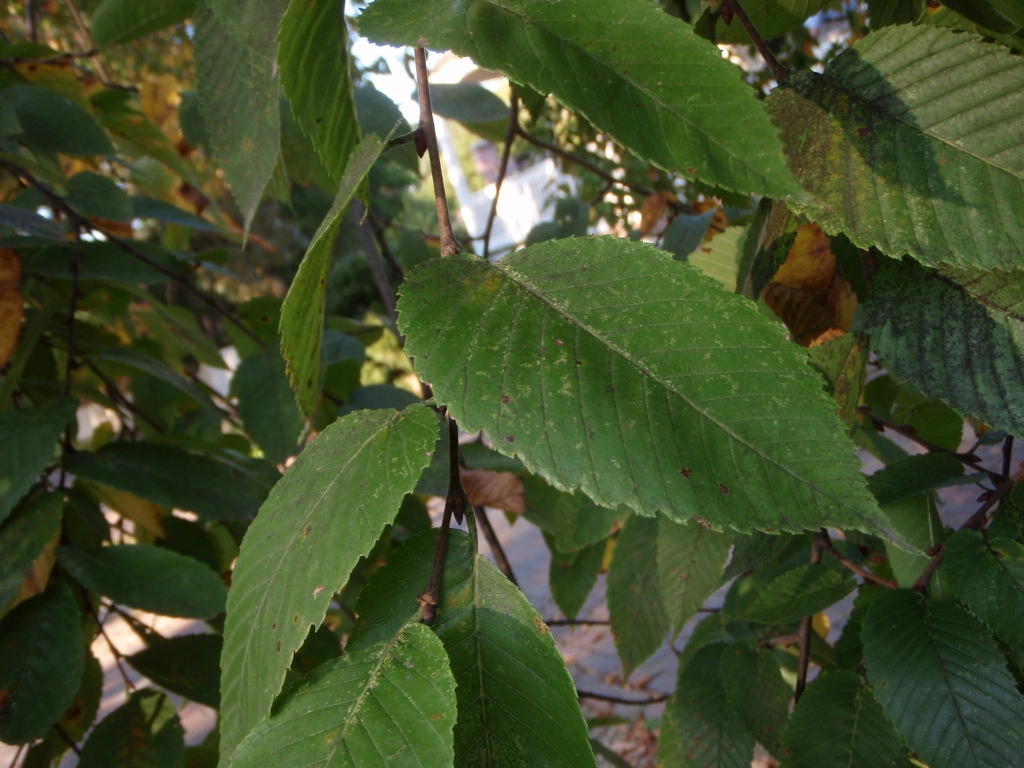
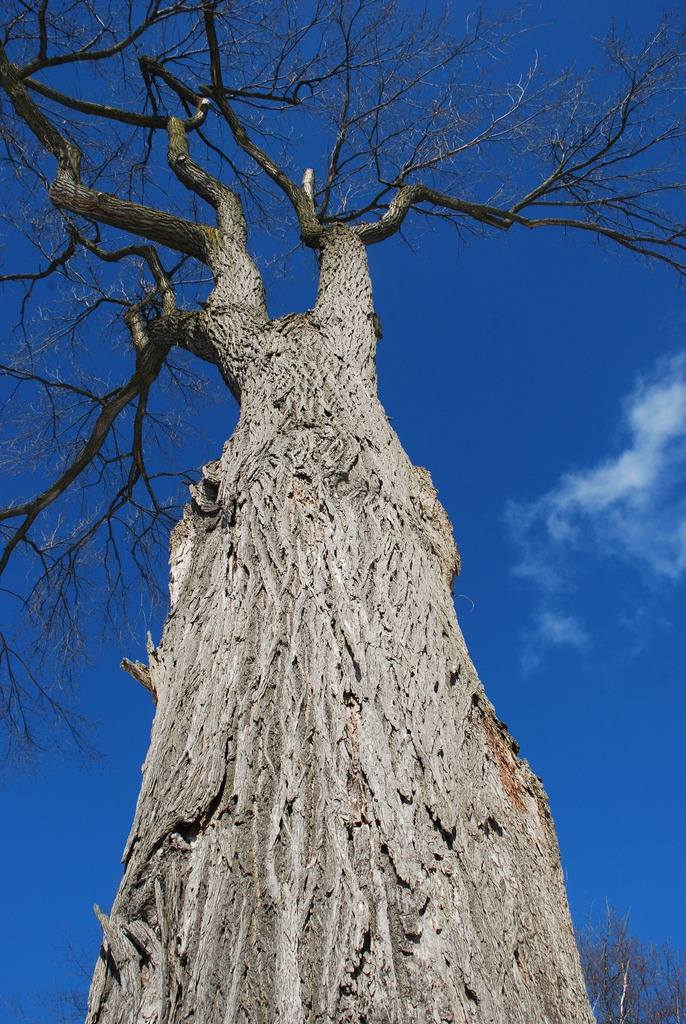
American elm grows well in average, medium moisture, well-drained soils in full sun, although it tolerates light shade. It prefers rich, moist loams and adapts to both wet and dry sites. It tolerates urban conditions. The leaves are alternate with a doubly serrated margin, an unequal base, and pubescent on the undersides of the leaf. The bark is ashy gray with flat-topped ridges separated by diamond-shaped fissures. In late winter, small flowers mature in clusters of 3 to 5. The tree produces a flattened samara with a hairy margin. When sited in a dense forest, the tree tends to have a narrow crown and a long, clear bole. When sited in an open area, the tree tends to fork near the ground and develop an arching crown. Ulmus americana can be pruned and kept at shrub size by cutting them to the ground in the fall every 2 to 3 years.
Seasons of Interest:
Bloom: Late Winter to Early Spring Foliage: Summer and Fall Fruit: Mid-Spring
Quick ID Hints:
deciduous tree with a naturally occurring vase-like habit, ranging from 60 to 80 feet tall and 30 to 60 feet wide
dark gray bark with flat braided ridges
smooth brown stems
green, simple, alternate, doubly serrate, offset base leaves with pubescence on the undersides
soft yellow fall foliage
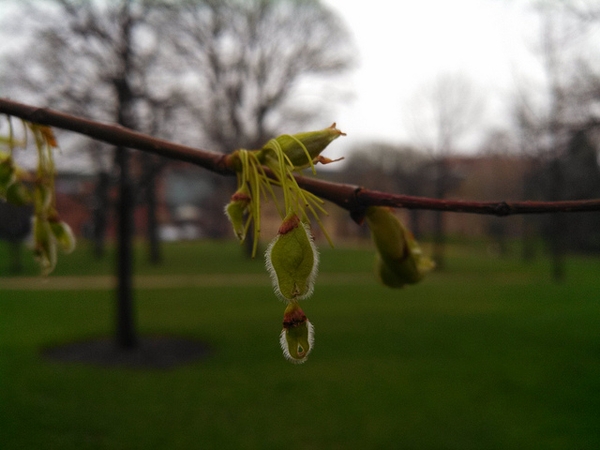
small greenish-red flowers inconspicuous flowers in the late winter to early spring
fruit is a seed surrounded by a flat oval papery wing appearing in mid-spring
Insects, Diseases, or Other Plant Problems: Dutch Elm Disease is a fatal fungal disease spread by airborne bark beetles that attacks the water-conducting tissue of the tree, resulting in wilting, defoliation, and death. There is no known cure. Phloem necrosis is a disease caused by a phytoplasma that attacks the food-conducting tissue of this tree, usually resulting in a loosening of the bark, wilting, defoliation, and death. Wetwood is a bacterial disease that results in wilting and dieback. Various wilts, rots, cankers, and leaf spots may also occur. Insect visitors include borers, leaf miners, beetles, mealy bugs, caterpillars, and scales.

 Dickson Tree Management & Beautification Board