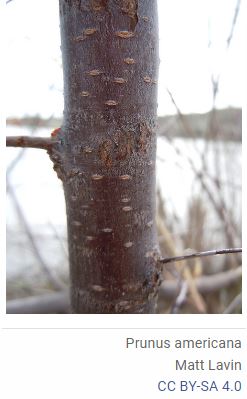
Prunus americana
Common Name(s): American Plum, American Wild Plum, Wild Plum
Phonetic Spelling
PROO-nus ah-mer-ih-KAY-nah
Description
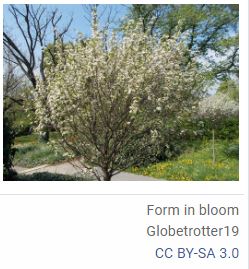
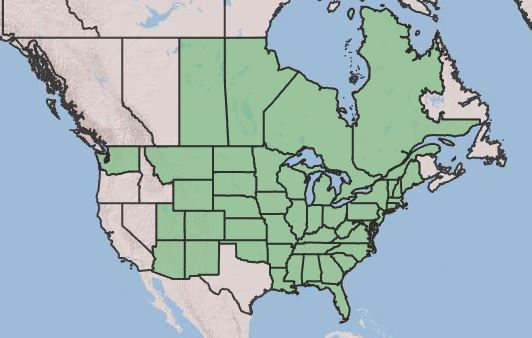
The American plum is a small, deciduous, single-trunk tree or multi-stemmed shrub which occurs in rocky or sandy soils in woodlands, pastures, abandoned farms, streams and hedgerows throughout the State. As a tree, it typically grows to 10-20′ tall with a broad, spreading crown. As a shrub, it suckers freely and can form large colonies. It is easily grown in average, dry to medium, well-drained soils in full sun to part shade. Remove suckers to prevent unwanted spread or to train into a small tree. It can form thickets with its thorn-like side branches so keep it will have to be maintained unless that is the desired result. It is fairly adaptable tough plant.
Fire Risk: This plant has a low flammability rating.
Seasons of Interest:
Blooms: Early spring Nut/Fruit/Seed: Late summer
Insects, Diseases, or Other Plant Problems: Plum curculio and brown rot can affect the fruit of the American Plum. Other potential disease problems include leaf spot, canker and black knot. Other potential insect problems include aphids, scale, borers and tent caterpillars. This plant is susceptible to damage from deer. Downy serviceberry, is a deciduous tree in the Rosaceae (rose) family, native to eastern North America. It typically grows on wooded slopes and cliffs, open woods, wooded bluffs, rocky woodlands, limestone glades, riverbanks, and edges of swamps. It is not frost tender.



 Dickson Tree Management & Beautification Board