Taxodium distichum
Common Name(s): Baldcypress, Bald Cypress, Cypress, Swamp Cypress
Previously known as: Taxodium distichum var. distichum
Phonetic Spelling
taks-O-di-um DIS-ti-kum
Description
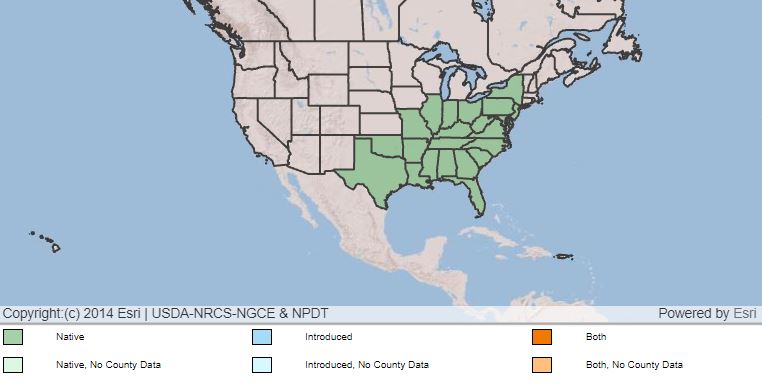
The bald cypress is a long-lived, pyramidal, deciduous conifer, and a cone-bearing tree that grows 50 to 70 feet tall and 20 to 30 feet wide. Old trees develop a wide, spreading base that narrows up the trunk with diameters as thick as 3 to 6 feet. A younger tree typically has a pyramidal habit; however, older specimens have an irregular flat top. It is one of the longest living trees in the world and its rings hold years of climate data. Although it looks like a needled evergreen in summer, it is deciduous or “bald” as the common name suggests. It is native to southern swamps, bayous, and rivers, primarily being found in coastal areas from Maryland to Texas and in the lower Mississippi River valley to as far north as the southeast corner of Missouri. In the deep South, it is a familiar sight growing directly in swampy water, often in large stands, with its branches heavily draped with Spanish moss. In cultivation, however, it grows very well in drier, upland soils.
The genus name, Taxodium, is Greek and means “yew like.” This references a family of trees known for their hardwood. The epithet, distichum, means ‘two ranked,” meaning the leaves grow in two rows.
The bald cypress is easily grown in average, medium to wet, moisture-retentive but reasonably well-drained soils in full sun to part shade. It prefers moist, acidic, sandy soils but tolerates a wide range of soil conditions, from somewhat dry soils to wet soils in standing water. This species has been known to tolerate flooded conditions for extended periods. The bald cypress is a low-maintenance tree with easy fall cleanup. It has a large taproot and is slightly salt tolerant.
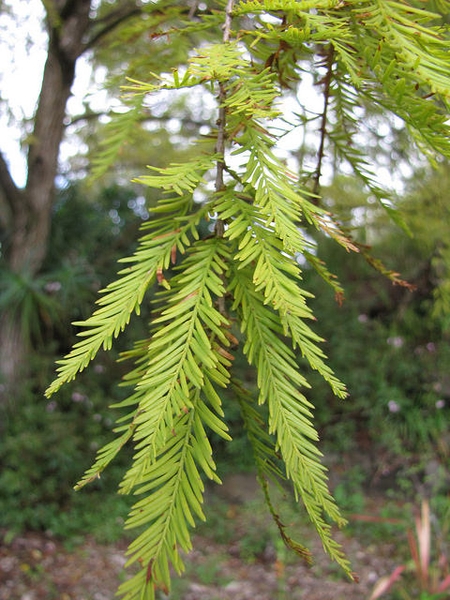
The roots develop knobby, conical “knees” or “cypress knees” that usually occur when the tree is grown near or in water most of the time. Exfoliating reddish-brown long narrow strips of bark are noted on younger trees, but older trees tend to peel much less. The base of the tree tends to be wider in older trees. The leaves are narrow, flat, alternate, spiral around the stem, and do not have any banding. The fall foliage is reddish-brown. The male cones are yellow to brown, long, pendulous measuring 1/8 inch wide, and appear in clusters. The female cone is globular, glaucous green to brown, and has short stalks.
The heavy, straight-grained, rot-resistant wood has been used for various purposes, including barrels, railroad ties, and shingles. The sapwood is cream-colored while the heartwood is brown.
Seasons of Interest:
Bark: Year-round
Bloom: Spring
Foliage: Spring, Summer, and Fall
Fruit: Fall
Quick ID Hints:
deciduous, conifer, 50 to 70 feet tall with a pyramidal habit,
narrow, long strips of reddish-brown exfoliating bark on younger trees
widened base of the tree with age
the leaves are narrow, flat, non-banding, alternate, two-ranked, and spiral around the stem
male cones are long pendulous, 1/8 inch wide, yellow to brown, and appear in clusters
female cones are round, glaucous green to brown, and appear on short stalks
Insects, Diseases, or Other Plant Problems: Twig blight is an occasional disease pest. Chlorosis often occurs in alkaline soils.




 Dickson Tree Management & Beautification Board