
Populus grandidentata
Common Name(s): Largetooth Aspen, Poplar, or Popple
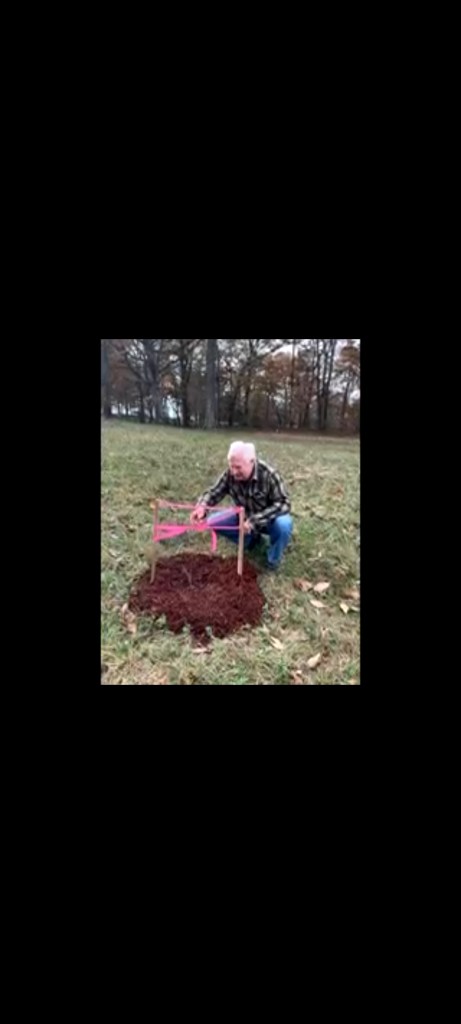
A Bigtooth Aspen has recently been planted in the City of Dickson Arboretum. Generously donated by Mrs. Sheryl Eades and transplanted very carefully by Mike Tummins, it is a small tree at present and we are very hopeful it will thrive. Look for updates to come as we watch this exciting new addition grow.
Description
Bigtooth Aspen
Bigtooth aspen (Populus grandidentata), is also known as largetooth aspen, poplar, or popple. Bigtooth aspen is capable of growing on a wide range of sites, although it is less adaptable than quaking aspen. It prefers soils which are well drained, yet moist, although it will grow on a variety of soils from moist bottomlands to rock outcrops or even heavy clay soils.
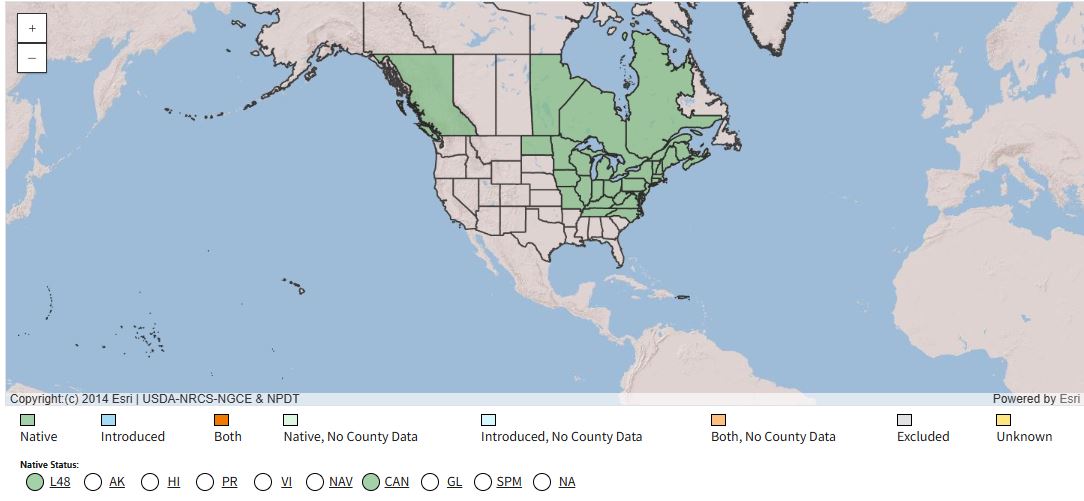
Although present in some counties in Tennessee, this tree is not normally seen in this growing zone.
Habitat: Can be found growing in upland woods on moist to dry sites.
Hardiness: Zones 1 though 6
Growth Rate: Fast
Mature Shape: Narrow to rounded
Height: Mature size varies with species, ranging from 50 feet to 100 feet.
Width: Varies with species.
Site Requirements: Native to North America, aspen trees grow naturally in moist sites and full sun.
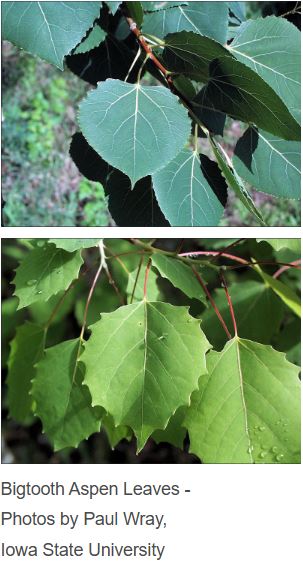
Leaves: Alternate, simple, single toothed, triangle shaped.
Flowering Dates: Eary to mid-spring
Seed Dispersal Dates: early summer
Seed Bearing Age: 10-20 years
Seed Bearing Frequency: Every 4-5 Years
Seed Stratification: Seeds disperse in the spring and immediately germinate. No stratification period is needed.
Aspen leaves are simple, alternate, broadly ovate in outline, 2 to 5 inches in diameter with a flattened petiole 2 to 3 inches long. The leaf is broadest near the base, has a short and pointed tip and has 5 to 15 large blunt teeth on each side of the leaf. Winter buds are 3/16 to 1/4 inch long, slightly divergent from the twig, each with its lowest bud scale centered over the leaf scar.
The bud is light brown in color and covered with fine gray hairs. The bark on young trees is thin, and dull yellow green in color; on older trees it becomes thick with flattened ridges and narrow furrows and dark brown in color. Twigs are moderate in diameter, brown, with half-round leaf scars with three bundle scars. Bigtooth aspen can be distinguished from quaking aspen by the smaller number and the larger size of the teeth on the leaves and from the lighter colored buds.
Bigtooth aspen is a short lived (50 years), fast growing, medium sized tree. It seldom exceeds 60 feet in height and 20 inches in diameter. It is considered a pioneer species; it is often a primary invader of sites which have been cleared or burned. Its wind-blown seeds are distributed great distances by the winds. Like most aspens, it reproduces rapidly from root suckers, forming dense stands when cut or harvested. Often what appears to be a large group of individual trees are root sprouts from a single seedling or tree.
It has some good ornamental characteristics including light-colored bark and its adaptation to a wide variety of sites, but its root sprouting habit discourages widespread use for shade or ornamental planting. It can be managed in the landscape as a small grove of trees because of its root sprouting characteristic. The fall color of bigtooth aspen is a brilliant gold or yellow; its color development is usually later in the fall than most other trees. Bigtooth aspen does play a very significant role in the lives of many other organisms. Throughout its range, more than 500 species of animals and plants utilize the aspens. Aspens are important browse for a variety of game animals. The seeds, buds and catkins are utilized by many birds and some mammals.
https://naturalresources.extension.iastate.edu/forestry/iowa_trees/trees/bigtooth_aspen.html

 Dickson Tree Management & Beautification Board