
Prunus serotina
Common Name(s): Black Cherry, Wild Cherry, Wild Rum Cherry
Phonetic Spelling
PROO-nus seh-roh-TEE-nuh
Description
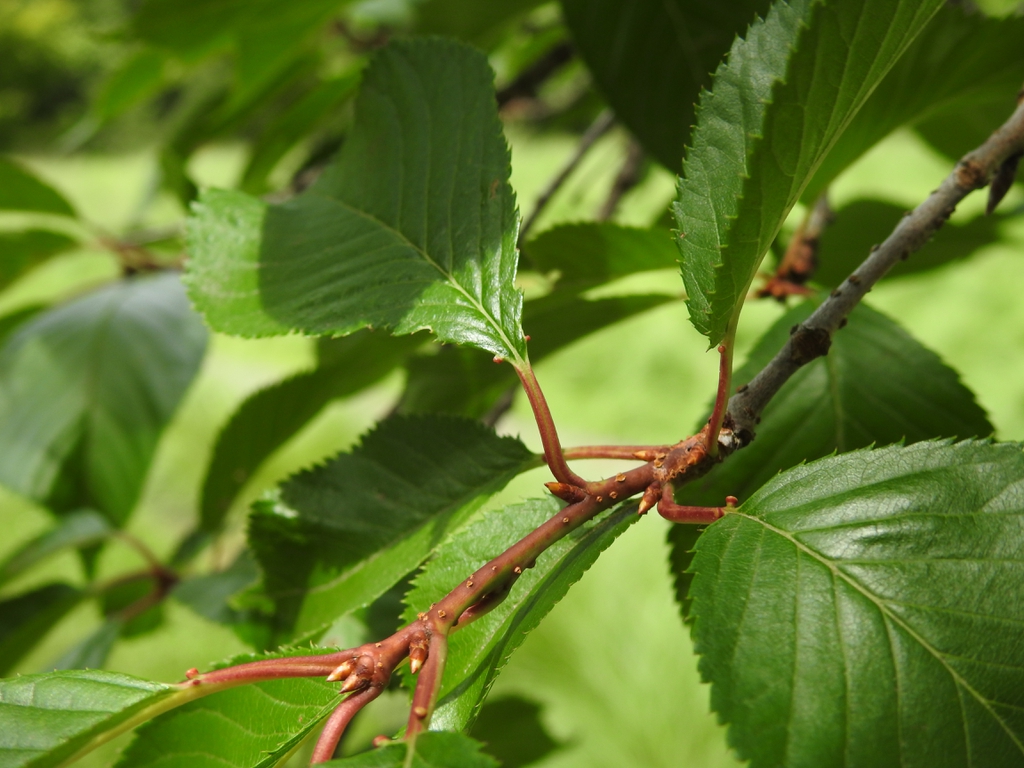
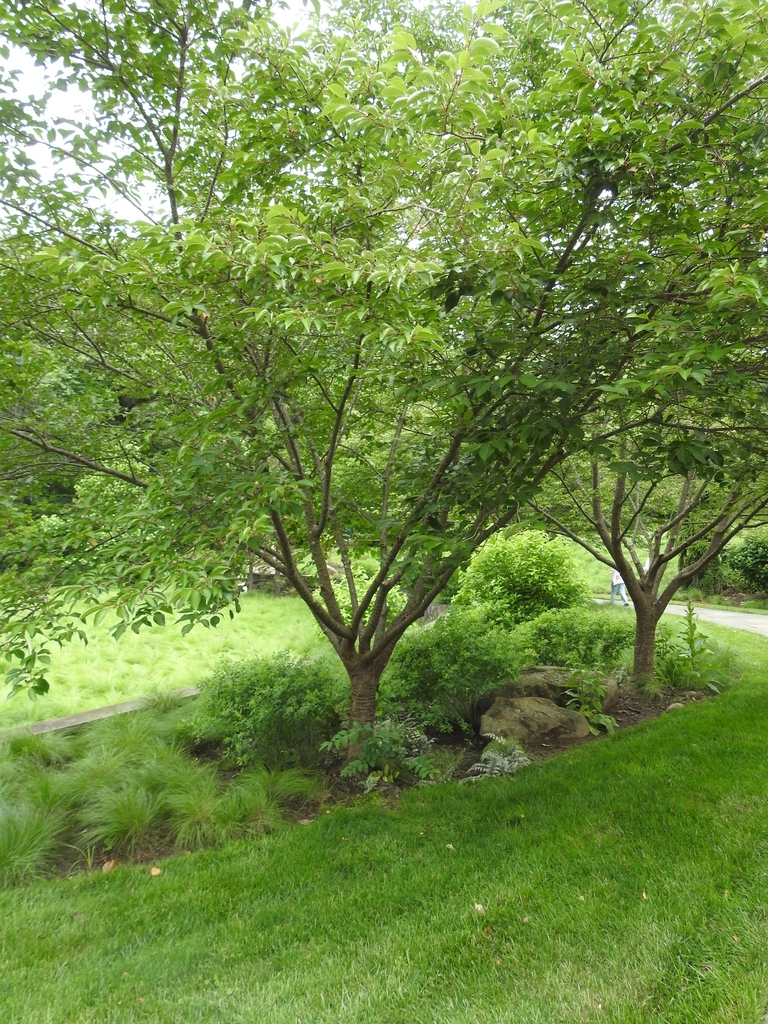
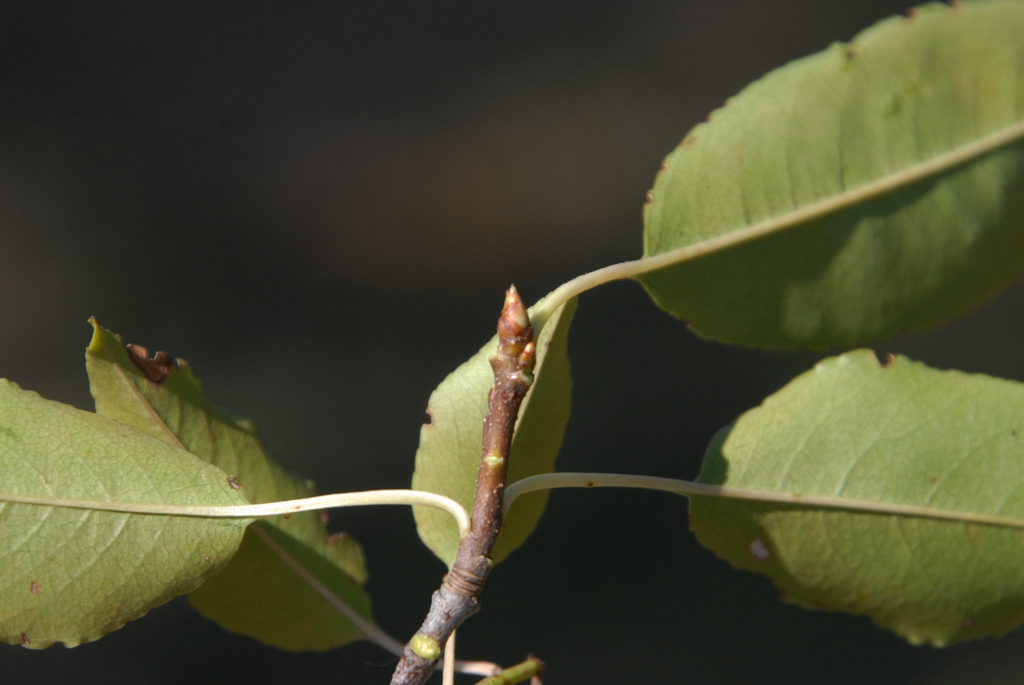
Black Cherry is a deciduous tree that may grow 60 to 80 feet tall. The tree has alternate leaves with a finely toothed margin, inconspicuous glands on the stem, and yellow-brown pubescence on the underside of the leaf. The bark of the tree is marked by horizontal lenticels. As the tree ages, it exhibits a scaly or flaky pattern. In the spring, small, white flowers mature. The tree produces a round, dark purple fruit that matures in late summer.
The bark of mature trees develops a dark scaly or flaky pattern. Bark, roots, and leaves contain concentrations of toxic cyanogenic compounds, hence the noticeable bitter almond aroma of the inner bark.
Prunus serotina can be pruned and kept at shrub size by cutting them to the ground every 2-3 years.
Fire Risk: This plant has a low flammability rating.
Insects, Diseases, or Other Plant Problems: As with most cherries, the black cherry tree it is susceptible to a large number of insect and disease pests. Potential diseases include leaf spot, die back, leaf curl, powdery mildew, root rot, and fireblight. Potential insects include aphids, scale, borers, leafhoppers, caterpillars, tent caterpillars and Japanese beetles. Spider mites may also be trouble.
This plant has medium severity poison characteristics.
Poison Delivery Mode: Ingestion




 Dickson Tree Management & Beautification Board