

Castanea mollissima
Common Name(s): Chinese Chestnut
Phonetic Spelling
kas-TAY-nee-uh maw-LISS-ih-muh
Description
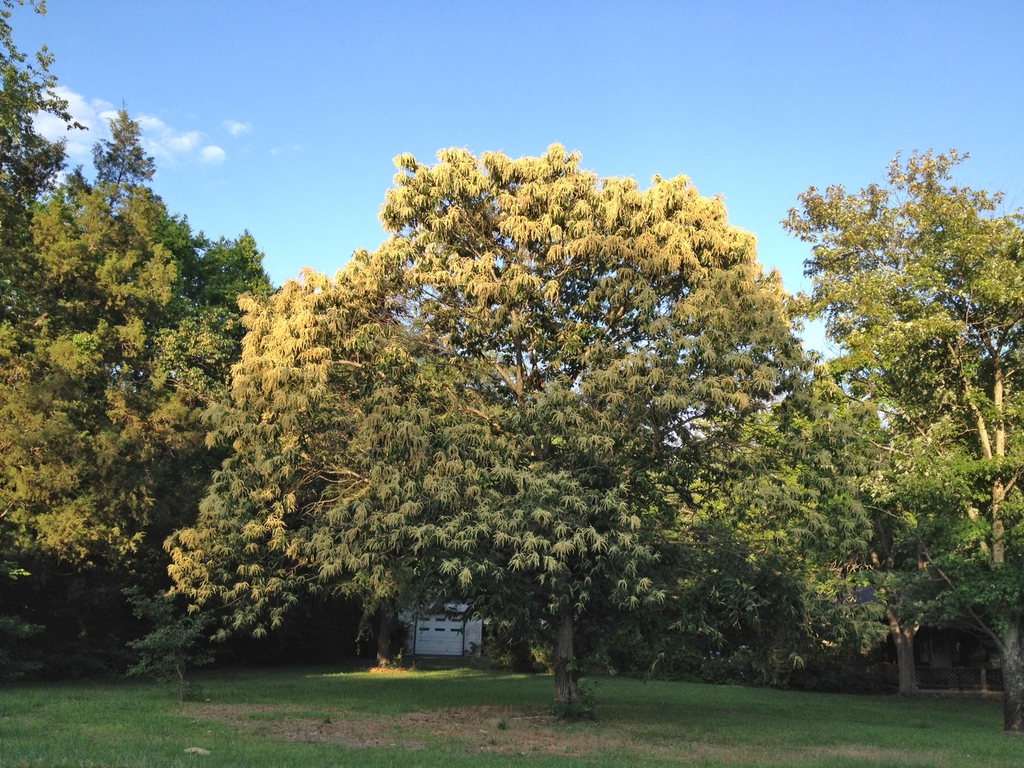
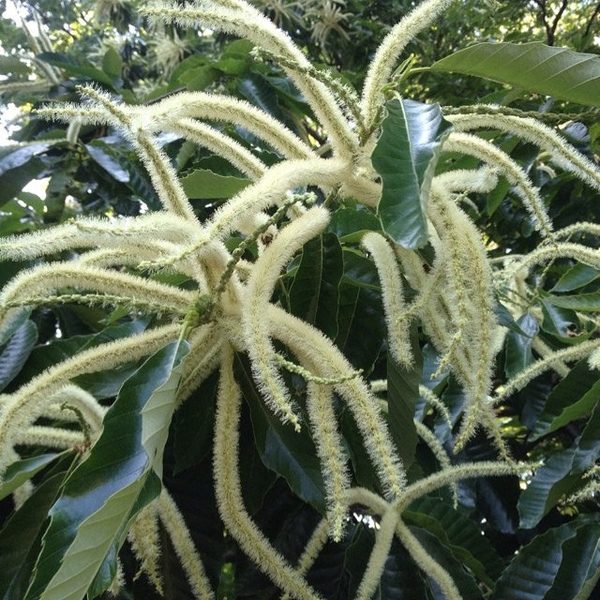
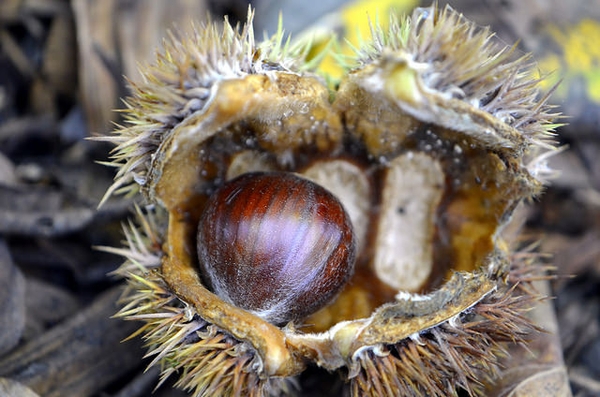
Chinese chestnut is a medium-sized deciduous flowering tree that is a native of China and, in its natural habitat, often found in woods, forests, and mountain slopes from sea level to 9000 feet. This tree can reach a height and spread of about 40 feet, with a symmetrical and round crown. It branches close to the ground, which makes it a good landscape tree. The smell of the flower might be offensive to some people. The nut is edible and attracts wildlife, but use caution when handling it because it is spiny. The tree is resistant to chestnut blight. Chinese chestnut will make a good shade tree in the landscape and has interesting fall color.
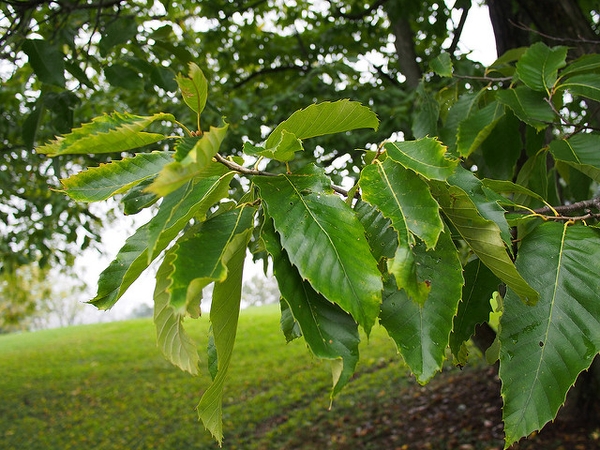
The genus name comes from the town of Castania in Thessaly where the trees reportedly grew in abundance. The specific epithet comes from the Latin word for soft, in reference to the pubescent twigs and leaf undersides.
Chinese chestnut prefers full sun to partial shade and moist well-drained soil It will grow in clay, sandy soils, loam, and even tolerates nutritionally poor soils. It will do well in neutral and mildly acidic conditions and tolerates occasional drought, hot summers, and humidity. If you are growing this tree for its edible nuts, planting more than one tree will facilitate cross-pollination and produce a more abundant nut crop. However, falling chestnuts can pose a litter problem.
Diseases, Insect Pests, and Other Plant Problems:
No known diseases or insect pests. It is resistant to chestnut blight, which has nearly wiped out the native American chestnut.
 Dickson Tree Management & Beautification Board