Cornus florida var. rubra ~ Benthamidia florida var. rubra
Common Name(s): Flowering Dogwood
Previously known as: Cynoxylon floridum var. pendulum, Cynoxylon floridum var. rubrum
Phonetic Spelling
KOR-nus FLOR-ih-dah
See this tree at D001 and also the cultivar ‘Cherokee Princess’ at M001 planted in 2024 as a Memorial Tree for a longtime Gardening Partners member, a valued Dickson Tree Mgmt. Board member and a dear friend, Linda JoAnn Hayes. ‘Cherokee Princess’ is planted in full sun and features large white blooms and is highly resistant to spot anthracnose. We hope JoAnn would have approved.
Description
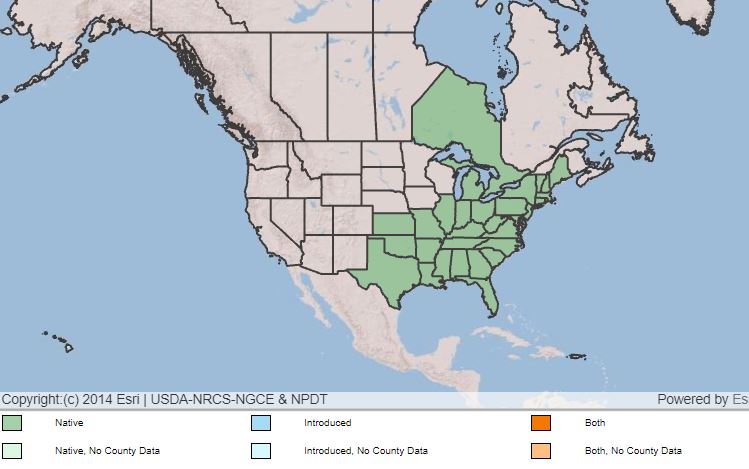
Flowering dogwood is a woody, deciduous, flowering understory tree in the Cornaceae (dogwood) family that may grow 15 to 25 feet tall. It is native from southeastern Canada to eastern North America to eastern Mexico. The genus name comes from the Latin word for horn, cornu, most likely in reference to the tree’s hard, dense wood.
Flowering dogwood can be a tricky plant to grow in a landscape setting. It is commonly found growing in woodland margins. Locate flowering dogwood in a site that receives full sun to partial shade. Plant in well-drained soil that is high in organic matter and has a slightly acidic to neutral pH. A 2 to 4-inch layer of mulch will help keep the roots cool and moist in hot summers. Propagate flowering dogwood by seed or stem cutting.
Dogwood’s true flowers are visited by butterflies and specialized bees, and its red fruits are a food source for songbirds and other wildlife from fall through winter. This tree is quite tolerant to heat once established and has a low flammability rating.
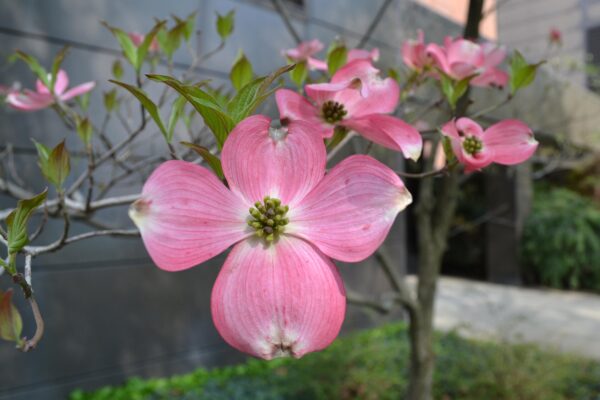
The dogwood flower is actually the petal-like bracts. The tree is usually found growing under larger forest trees and at woodland edges. With multi-season interest, it has many uses in the landscape such as a butterfly, pollinator, or children’s garden, a native or winter garden, accenting a patio or play area, a specimen, or a shade tree.
Seasons of interest:
Foliage: Fall
Bloom: Spring
Fruits: Fall
Bark: Winter
Quick ID Hints:
Showy bracts emerge before the leaves.
Leaves are opposite with veins that bend up toward the tip.
Leaves have a smooth to wavy margin.
Bark becomes scaly to finely blocky as it matures.
Insects, Diseases, and Other Plant Problems: Calico scale, dogwood borer, dogwood sawfly, Japanese maple scale, leafhoppers, oyster shell scale are a problem. Dogwood anthracnose is not all that common, only occurring at 1800 feet or higher elevation. Spot anthracnose is more common. Trees are also susceptible to powdery mildew, leaf spot, canker, root rot and leaf, twig blight crown canker, bacterial leaf scorch, powdery mildew, and septoria leaf spot. The foliage is browsed by white-tailed deer, and these trees do not withstand pollution. This tree can be challenging to grow in urban settings, other native trees should be considered.


Cathy DeWitt

Martin LaBar

Mollsie
 Dickson Tree Management & Beautification Board