Chionanthus virginicus
Common Name(s): American Fringetree, American Fringe Tree, Fringetree, Fringe Tree, Grancy Greybeard, Old Man’s Beard, Sweetheart Tree, White Fringetree
Phonetic Spelling
kee-oh-NAN-thus ver-JIN-ih-kus
Description
Fringetree is a small, deciduous tree in the olive family (Oleaceae). It is native to the eastern U.S. Its genus name comes from the Greek chion meaning “snow” and anthos meaning “flower.” The species epithet is Latin for “of Virginia.”
This plant grows best in full to part sun with the best foliage in partial shade and the best flowering in full sun. Plant in average to rich, well-drained neutral to alkaline soil. It can tolerate clay soil, however, and also tolerates some drought. Small plants are best transplanted when young because larger plants resent disturbance at their roots.
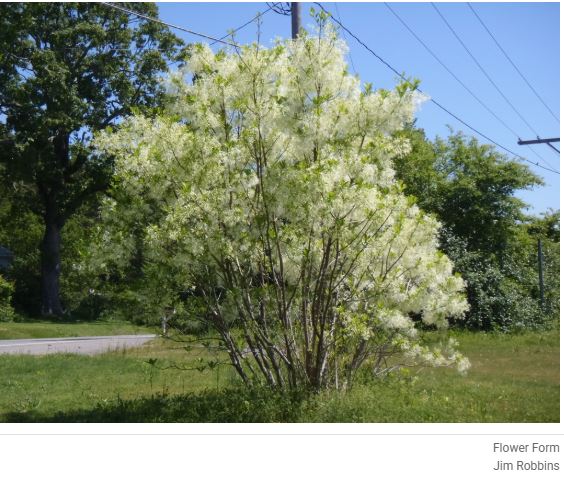
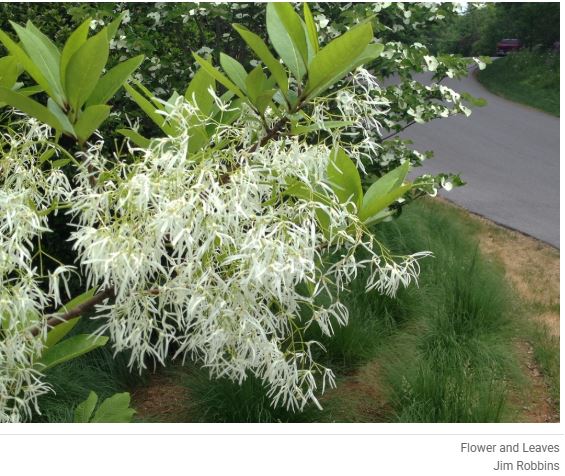
Fringetree generally grows from 12 to 20 feet tall and wide, with a multi-stemmed rounded habit, though it can be trained into a single trunk. Fringetree grows about 6 to 10 inches each year. In late spring, fragrant flower clusters with creamy white fringe-like petals appear. The showy blue-black fruits, maturing in late summer, provide a food source for birds and wildlife. A clear yellow color appears to provide some brightness to the fall landscape, and the bark, with its scaly dark brown ridges and red furrows, brings winter interest. In the nursery, it may be difficult to determine if the plants are male or female unless they have fruits present. The flowers have both male and female parts but are functionally unisexual. The system often breaks down causing a few fruits to form on functionally male trees. While the male flowers are slightly larger and showier, both male and female plants make beautiful additions to any garden.
Fringetree is a nice specimen plant in lawns and also works well as a flowering tree in a native garden. Plant it in small groups along a woodland border or take advantage of the sweetly scented blooms in a children’s or sensory garden
Fire Risk: This plant has a low flammability rating.
The Clemson Cooperative Extension Home and Garden Information Center has a factsheet on common fringetree diseases and insect pests.
Insects, Diseases, or Other Plant Problems: This plant has some susceptibility to scale and borers (particularly when stressed by drought). It is sometimes attacked by the emerald ash borer.


 Dickson Tree Management & Beautification Board