Gleditsia triacanthos
Common Name(s): Common Honey Locust, Honeylocust, Honey Locust, Honey Shucks Locust, Sweet Bean Tree, Sweet Locust, Thorny Locust
Previously known as: Gleditsia ferox
Phonetic Spelling
gleh-DIT-see-uh try-a-KAN-thos
Description
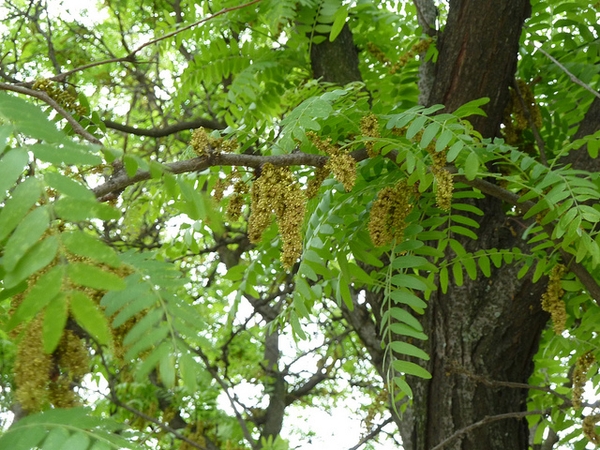
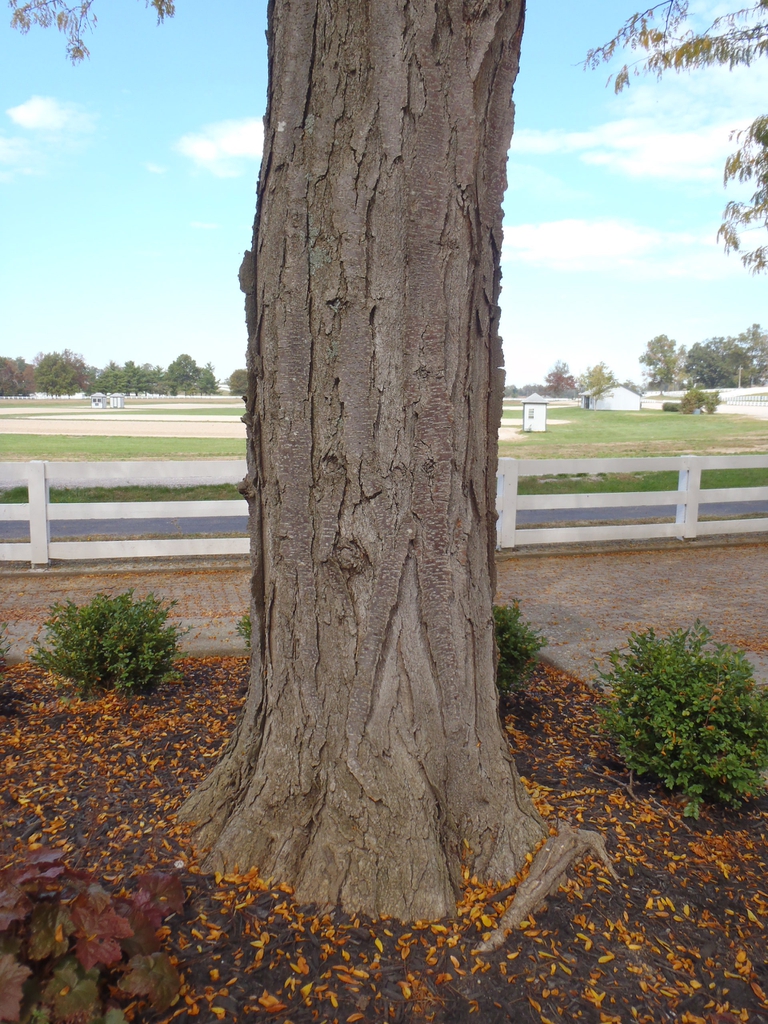
Honey locust is a rapidly growing, large deciduous tree in the Fabaceae (bean) family. It is native to central and eastern North America, from North Carolina to Mexico. This tree can grow up to 80 feet tall with a single trunk 2 to 3 feet in diameter and a broad, flat-topped crown, casting light shade that allows turf grass to grow underneath. It sometimes grows in forests but is more commonly found beside roads and fields.
Plant it in full sun and in well-drained, moist soil high in organic matter. It will tolerate partial shade but does not grow in full shade. It also tolerates a wide variety of soil types and moisture conditions. The trunk and branches have stout thorns (up to 3 inches long) that have one or three branches. Propagation is through seed or stem cutting.
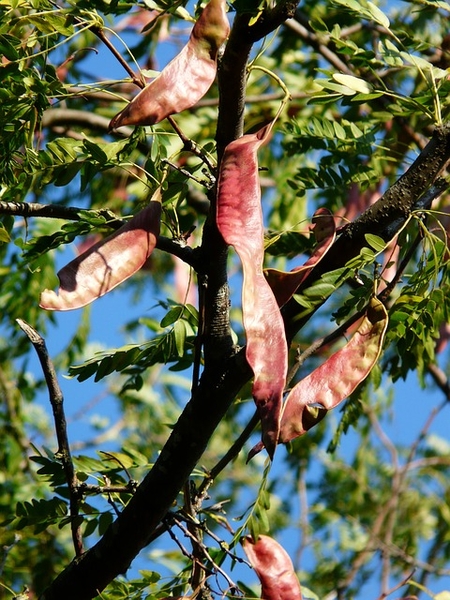
This tree is not recommended for landscapes because of its thorns and seed pods. The tree can spread quickly and become a weed problem in some pasture areas. Mowing or cutting increases sprouts. Look for thornless varieties like Gleditsia trianthos var. inermis or thornless and podless cultivars like ‘Sunburst.’
Honey locust is an excellent choice to plant in a native garden or as a street or security tree. The pulp inside the seed pod is edible which makes the tree an attractant for bees, moths, butterflies, and small mammals. This tree is highly salt, wind, and drought tolerant once established and resistant to damage by deer and pollution.
Insects, Diseases, and Other Plant Problems: Borers, webworms, and locust leafminers may be problems. Honey locusts are susceptible to leaf spot, canker, witches’ broom, powdery mildew, and rust.

Geneva Wirth
Wendy Cutler
Jim Robbins

Geneva Wirth

 Dickson Tree Management & Beautification Board