Ostrya virginiana
Common Name(s): American Hop-hornbeam, Eastern Hop Hornbeam, Hop Hornbeam, Hop Horn Beam, Ironwood, Leverwood, Wooly Hop hornbeam
Phonetic Spelling
OSS-tree-uh vir-jin-ee-AN-uh
Description
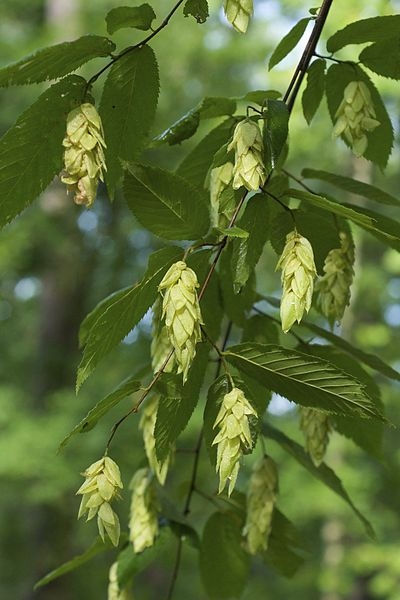
Eastern hop-hornbeam, is a slender deciduous tree in the Betulaceae (birch) family. The common name is derived from the hardness of its wood and the hop-like fruit. It is found in dry, rocky forests and sloped areas, although some larger specimens are found in deep, well-drained soils in mixed stands of bottomland hardwood. With a generally rounded to oval top and horizontal drooping branches it may grow 20 to 35 feet tall and have a trunk diameter of 7 to 10 inches, although some specimens can reach 50 feet with a trunk diameter of 2 feet. A rather slow-growing tree, reaching only 10 to 15 feet tall over 15 years, Eastern hop-hornbeam is a small to medium understory tree that is hardy to zone 3.
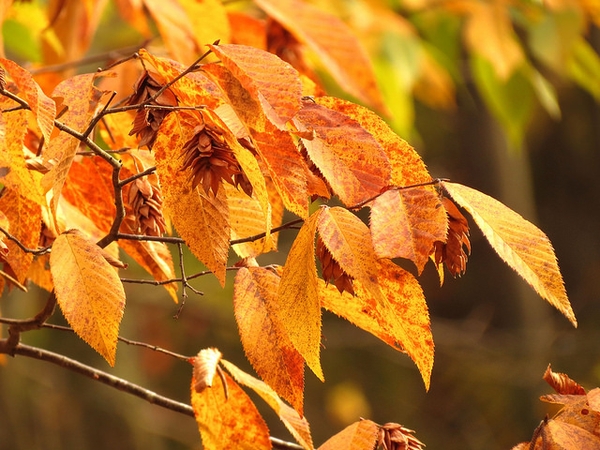
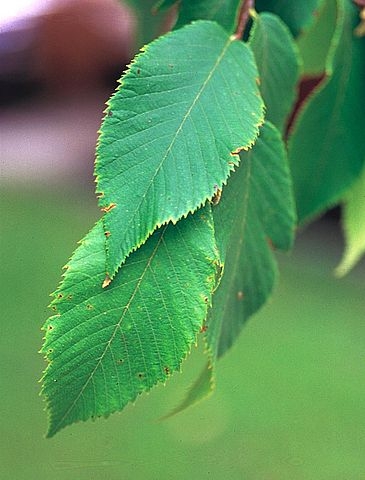
The leaves look similar to and can be confused with birch trees, and its overall form can sometimes be confused with an elm tree. It is easy to grow and succeeds in most soils, although it thrives in any good loam. It does not demand much light and prefers a partial to deep shade. It tolerates drought and heavy clay soils making it low maintenance and appropriate for urban settings.
Showy, shaggy bark provides winter interest and a planted row can be pruned to create an interesting hedge. Plant in a lawn, along a driveway, street, or in a woodland garden. Note that the tree does not tolerate salt and would not do well in a seaside environment.
Insects, Diseases, and Other Pest Problems: No serious insect or disease problems although gypsy moths can be a problem.
Katja Schultz

BotBln
Eric Hunt

Katja Schultz

 Dickson Tree Management & Beautification Board