

Gymnocladus dioicus
Common Name(s): Coffeetree, Kentucky Coffee Tree
Previously known as: Guilandina dioica, Gymnocladus canadensis
Phonetic Spelling
jim-noh-KLAY-dus dye-oh-EE-kus
Description
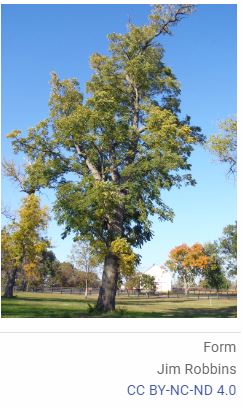
The Kentucky Coffeetree is a slow to moderate-growing, large, deciduous, and native tree in the Fabaceae or legume family that grows 60 to 80 feet tall and 40 to 55 feet wide with an oval, open, to irregular habit. It has very large pinnately compound leaves that measure 3 feet long and 2 feet wide and have numerous leaflets. The leaves emerge in the late spring and appear pinkish-bronze and then mature to a bluish-green. Panicles of greenish-white flowers appear at the branch tips in late spring to early summer. In the fall, the leaves turn yellow and the female trees have clusters of large purplish-brown or reddish-brown seed pods.
This tree is native to southeastern Canada and the central and eastern United States. Its native habitats include moist, rich woods, wooded hillsides, and floodplains; however, the Kentucky Coffeetree is declining in number due to over-harvesting.
The genus name, Gymnocladus, is derived from the words, gumnos, meaning naked, and kladdos, meaning branch. This references the fact that the tree is without leaves much of the year. Its leaves emerge in late spring and drop by early fall. The specific epithet, dioicus, means dioecious and refers to it having separate male and female trees. The common name, Kentucky Coffeetree, is derived from the seeds being used by the Native Americans and early settlers as a coffee-like beverage.
It prefers being planted in the full sun, and moist, well-drained soil though this tree tolerates a wide range of soil types. Select male plants to avoid the littering of seed pods in the landscape. It is a good dependable city tree that is drought, air-pollution-tolerant, and tolerates occasional flooding. It tends to be fast-growing when it is young, but it has a moderate to slow growth rate as it ages.
The leaves, seeds, and pulp of this tree are poisonous to livestock, humans, and pets. If the seeds are roasted and ground they may be used to make coffee-like beverages.
The Kentucky Coffeetree does well in large lawns or parks. Some may consider the male tree more desirable because it does not create litter. but the female tree has showy and fragrant flowers. It makes an excellent addition to a rain garden or the landscape to provide shade. The tree’s interesting shape, bark, and seed pods are attractive and make added winter interest in a landscape.
Seasons of Interest:
Bark: Winter Bloom: Late Spring and Early Summer Foliage: Late Spring, Summer, and Early Fall Fruits: Fall, persist through Winter only on female trees
Quick ID Hints:
- large deciduous tree with an oval, open, or irregular habit
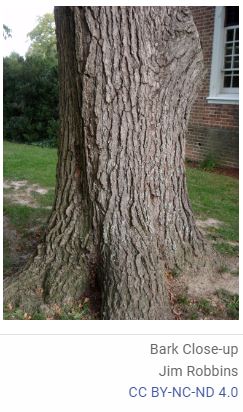
- bark is dull grayish brown with deep fissures and scaly ridges
- stems zigzag and leaf scar is heart-shaped
- very large bluish-green bipinnately compound leaves, measuring up to 3 feet long and 2 feet wide with 5 to 9 pairs of leaflets with entire margins
- leaves are pinkish bronze when they emerge in late spring
- dioecious, male flowers 4 inches long, female flowers are 12-inch long panicles of greenish-white, star-shaped blooms
- female flowers produce purplish-brown to reddish-brown seed pods that measure up to 10 inches long and 1 to 3 inches wide
Insects, Diseases, and Other Plant Problems: The Kentucky Coffeetree has no serious insect or disease problems though some consider the leaf litter and seed pods a nuisance on hardscaped surfaces.


 Dickson Tree Management & Beautification Board