

Magnolia macrophylla
Common Name(s): Bigleaf Magnolia, Great-leaved Macrophylla, Large-leaved Cucumber Tree, Umbrella Tree
Previously known as: Magnolia michauxiana, Metamagnolia macrophylla
Phonetic Spelling
mag-NO-li-a mak-ro-FIL-a
Description
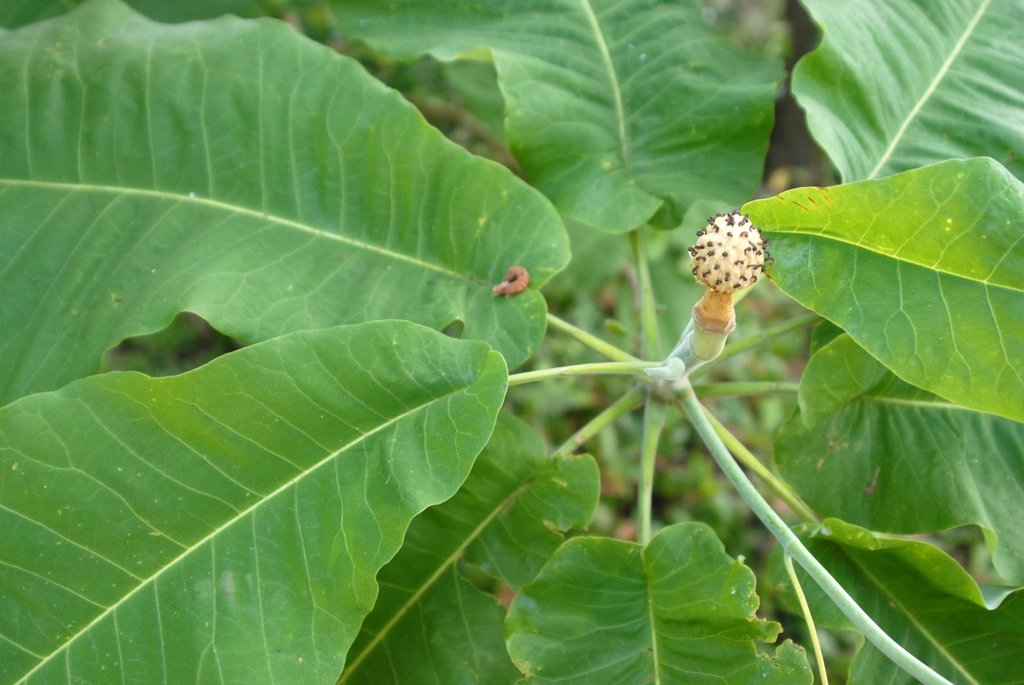
The large leaf magnolia has the largest simple leaves and largest flowers of any tree indigenous to North America. It is a rare, native, deciduous, pyramidal tree with a single trunk and develops a spreading, broad, rounded crown with age, and grows 30 to 40 feet tall and equally as wide. It may be semi-evergreen in the deep south. The huge oblong-obovate leaves measure up to 3 feet long and 1 foot wide. The leaves are green above and silvery-gray and pubescent below. Showy fragrant flowers are creamy-white with rose-purple at the petal bases, and measure 8 to 14 inches in diameter. Although quite large, the flowers are often located far off the ground and are not always easy to see close up. The flowers give way to spherical cone-like fruits which mature to red in late summer, releasing individual red-coated seeds suspended on slender threads at maturity.
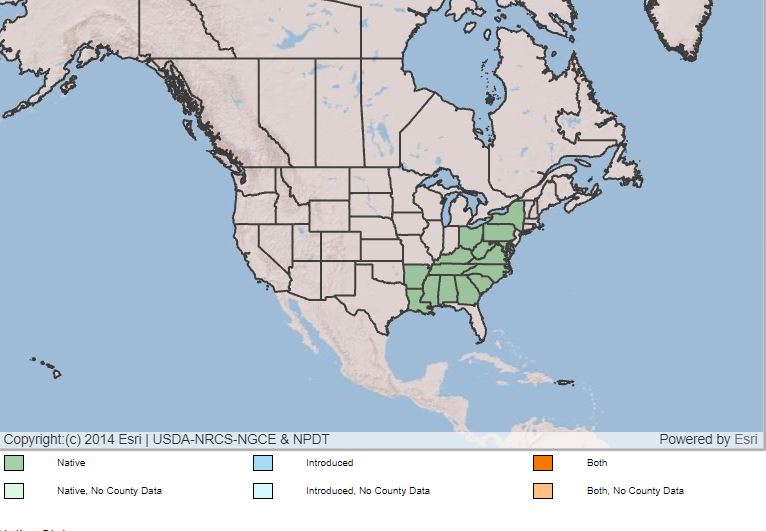
This unusual tree is native to the southeastern United States and is rarely found in the wild, being limited mainly to a few rich wooded areas in river valleys and ravines. Their populations are usually small and isolated.
The Large Leaf Magnolia was named by Andre Michaux, a French naturalist, and explorer. He discovered this tree in 1789 in Charlotte, North Carolina. Another resource states that the tree was first discovered in Moblie, Alabama around 1775 by William Bartram, a naturalist.
The genus name, Magnolia, honors Pierre Magnol, a French botanist from the 17th century. The specific epithet, macrophylla, is derived from two Greek words. Macro means large, and phyllon means leaf, and they reference the huge leaves of this tree. This tree produces the largest leaves and flowers of the Magnolia genus.
This tree is native, but difficult to use in the landscape due to its large leaves. It grows best in moist, organically rich, well-drained loams with acidic or neutral soil, and in full sun to partial shade. It is generally intolerant of dry and wet soils and urban pollutants. It is best sited in locations protected from strong winds which may shred the large leaves. It may take 12 or more years before the first blooms appear.
Plant the large leaf magnolia in an area in which it can meet its full potential. It is very attractive in lawns, but it should be planted so that it may be protected from urban pollutants and strong winds.
Seasons of Interest:
Bloom: Spring or Early Summer
Foliage: Spring and Summer
Fruits: Late Summer and Fall
Quick ID Hints:
- deciduous to semi-evergreen, 30 to 40 feet tall and wide, pyramidal to broad, rounded crown
- large green leaves with silvery pubescent undersides, measuring 3 feet long and 1 foot wide
- fragrant, large, 8 to 14-inches in diameter, creamy-white flowers with 6 to 9 tepals, the inner tepals are purple at the base
- cone-like, pubescent fruits that are red when mature and have red-coated seeds
Insects, Diseases, and Other Plant Problems: This tree has no serious insect or disease problems. It is best to plant this tree in a protected location to preserve the leaves. Strong winds can tear the leaves and make the tree less attractive. They are usually low maintenance except in the fall when the leaves drop.

~Linda Al-Sangar

~ Linda Al-Sangar

~ Linda Al-Sangar

 Dickson Tree Management & Beautification Board