
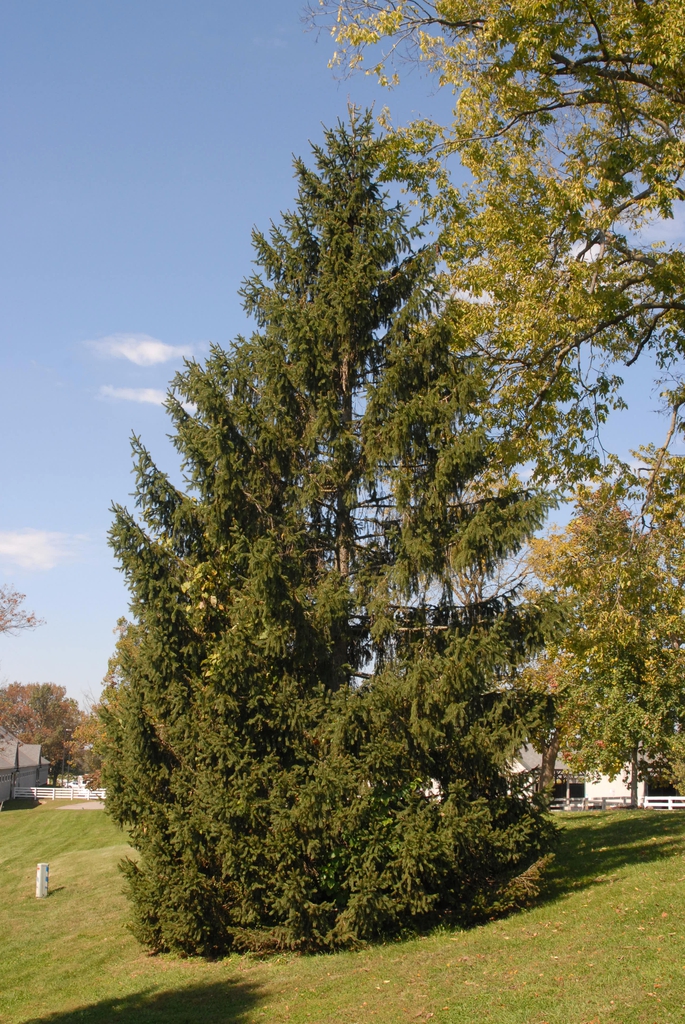
Picea abies
Common Name(s): Baltic Whitewood, Common Spruce, European Spruce, Norway Spruce
Previously known as: Abies picea, Pinus abies
Phonetic Spelling
Pi-see-a A-beez
Description
The Norway spruce is a rapidly growing woody, needled evergreen tree in the pine family (Pinaceae). It is native to Europe. It is the typical Christmas tree in Great Britain and has also served as the United States Capitol Christmas tree several times. There are over 150 cultivars available. The genus name, Picea, is thought to be derived from the Latin word, pix, which means “pitch” and refers to the sticky resin that is found on the tree’s bark. The specific epithet, abies, refers to a similar genus, Abies or fir.
When considering the Norway spruce, it is important to note that it does poorly in zone 7 in the southern United States because it prefers cool summer climates. It is best suited for a northern climate. This tree has a shallow root system, and it prefers full sun and moderately moist, well-drained, sandy, acidic soils. Norway spruce dislikes heat, wet feet, and hot, dry summers. Propagate it by seed.
In the appropriate climate, the majestic Norway spruce could be used in a large home landscape, woodland, meadow, or recreational play area. It can serve as a windbreak or screen in colder climates. Dwarf cultivars may be acquired to serve as foundation plantings, specimens, or accents in smaller areas of the home landscape.
Quick ID Hints:
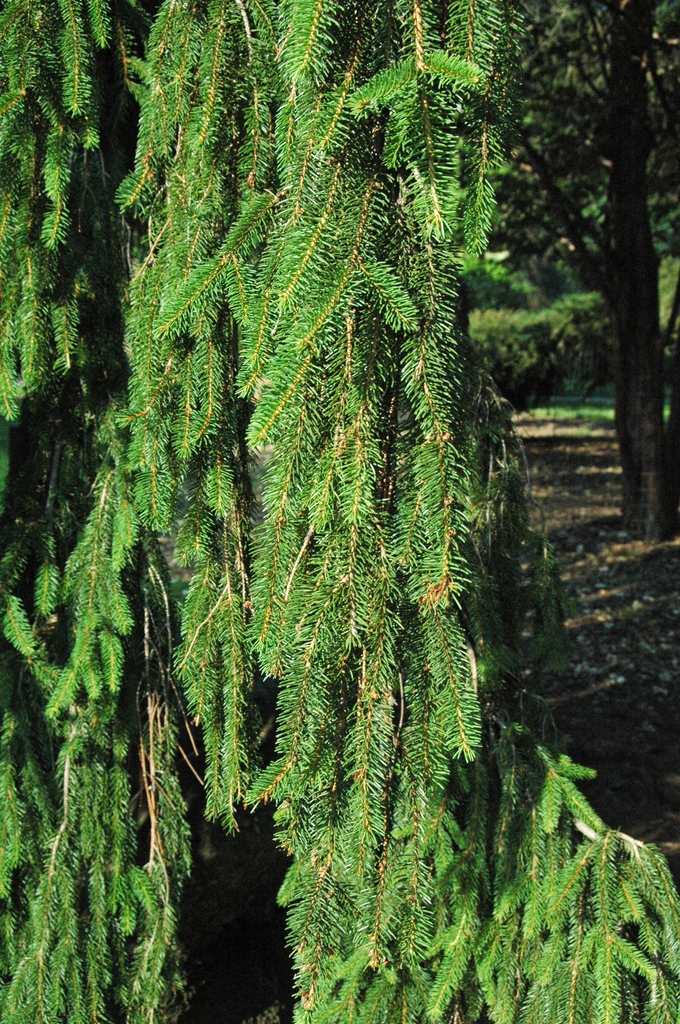
It is a 40 to 60 feet tall needled evergreen, conical with upright branches when young and pendulous branches as it matures.
Needles are up to 1-inch long, green, four-sided, saber-like, and arranged on the branch in rows.
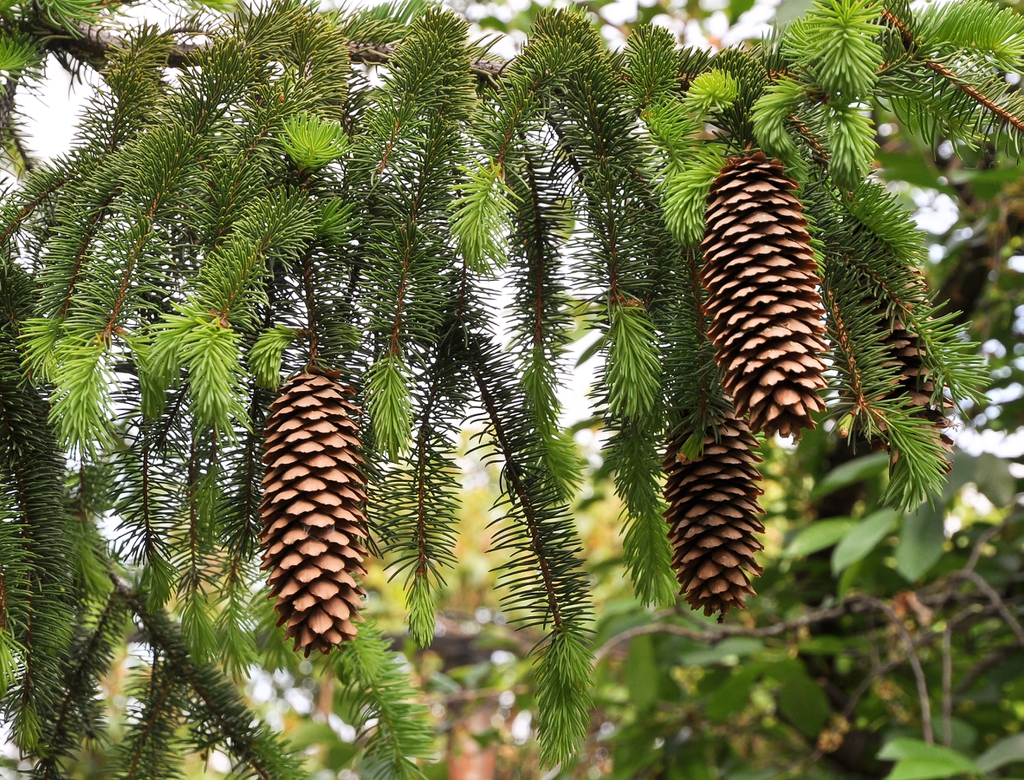
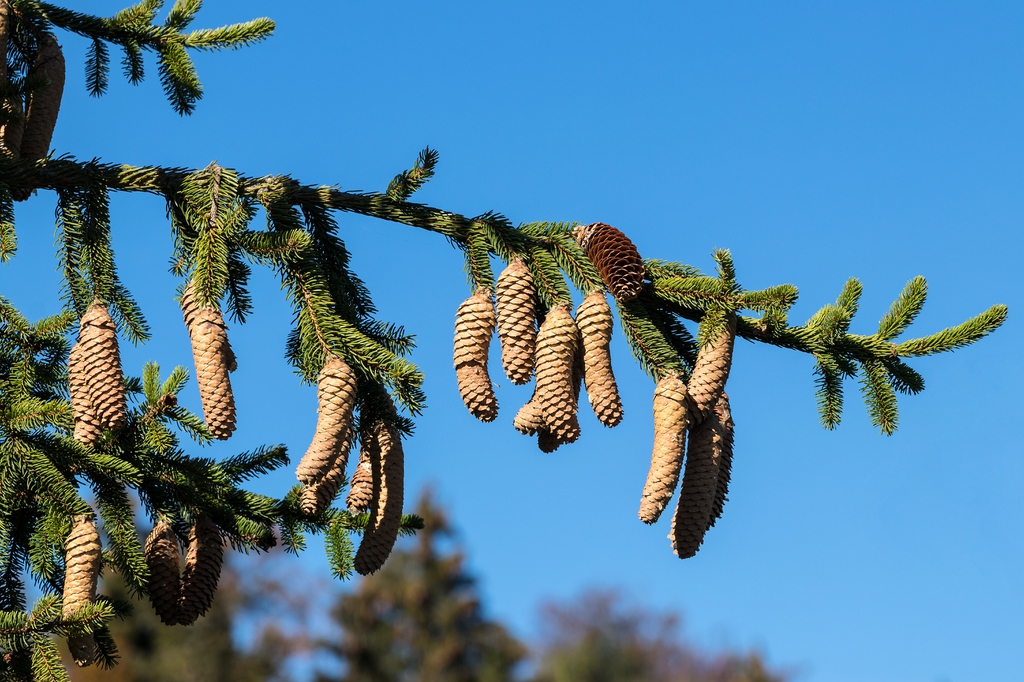
Cones are pendulous, green to violet when young, and as it ripens they turn silvery-brown and measure 4 to 6 inches long with rounded scales.
Insects, Diseases, and Other Problems: Potential insect pests include aphids, bagworms, budworms, borers, and red spider mites. It is also susceptible to cytospora canker, wood decay, needle cast, and rust.
Jim Robbins
James St. John
MrPanyGoff
H. Zell
 Dickson Tree Management & Beautification Board