
Quercus texana
Common Name(s): Nuttall Oak, Oaks, Shumard Oak, Texas Red Oak
Previously known as: Quercus nuttallii, Quercus nuttallii var. cachensis, Quercus palustris f. nuttallii, Quercus shumardii subsp. texana, Quercus shumardii var. texana
Phonetic Spelling
KWER-kus tek-SAY-nuh
Description
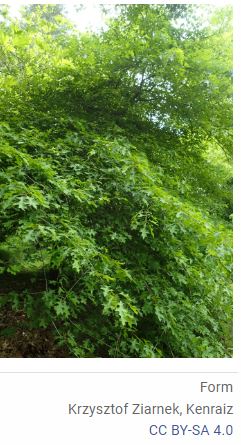
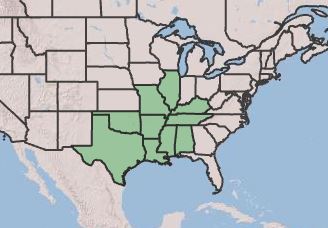
Nuttall oak is a decidous tree in the Fagaceae (oak) family. It is native to wet, heavy, bottomland soils in floodplain forests along the gulf coasts and up the Mississippi river basin. Nuttall oak is a beautiful, large, shade tree and provides rich, red-orange fall color. It grows up to 80 feet tall with a 50-60′ spread forming a large, stately tree with a narrow, rather open, rounded canopy that is somewhat reminiscent of Red Oak.
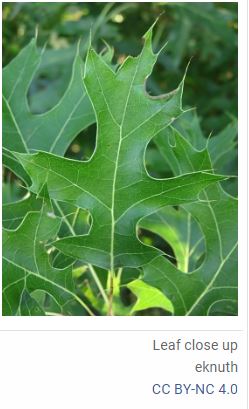
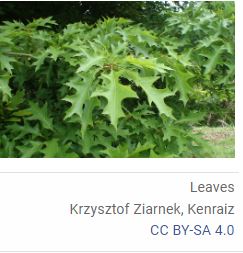
Well adapted to a wide range of soil types, it does well in low moist areas but is also drought tolerant once established. The crown spreads with age becoming round at maturity. The 4-8″ long deciduous leaves are deeply-lobed and have bristles on the tips of some lobes. A lovely dark green during most of the year, this plant puts on a vivid display of brilliant red to red-orange fall and winter foliage, providing a dramatic landscape statement. Fall and winter coloration varies from year to year in USDA hardiness zones 8 and 9. During the winter the bare tree provides interesting branching patterns.
This large shade tree is highly adaptable to urban conditions and does well as a street tree. The acorns mature over 2 seasons and attract birds and small mammals and the tree is a larval host plant for many moths and butterflies making it an excellent choice for a specimen or shade tree in a wildlife garden. It is a host plant for the larvae of the Imperial moth (Eacles imperialis), as well as numerous butterflies, including Banded hairstreak (Satyrium calanus), Edward’s hairstreak (Satyrium edwardsii), Gray hairstreak (Strymon melinus), White-m hairstreak (Parrhasius malbum), Horace’s duskywing (Erynnis horatius), and Juvenalis duskywing (Erynnis juvenalis).
Insects, Diseases, and Other Plant Problems: No serious pests or diseases. Downy serviceberry, is a deciduous tree in the Rosaceae (rose) family, native to eastern North America. It typically grows on wooded slopes and cliffs, open woods, wooded bluffs, rocky woodlands, limestone glades, riverbanks, and edges of swamps. It is not frost tender.
 Dickson Tree Management & Beautification Board