Platycladus orientalis
Common Name(s): Eastern Arbor-Vitae, Oriental Arborvitae, Oriental thuja
Previously known as: Thuja orientalis
Phonetic Spelling
plat-ee-KLAD-us or-ee-en-TAY-liss
Description
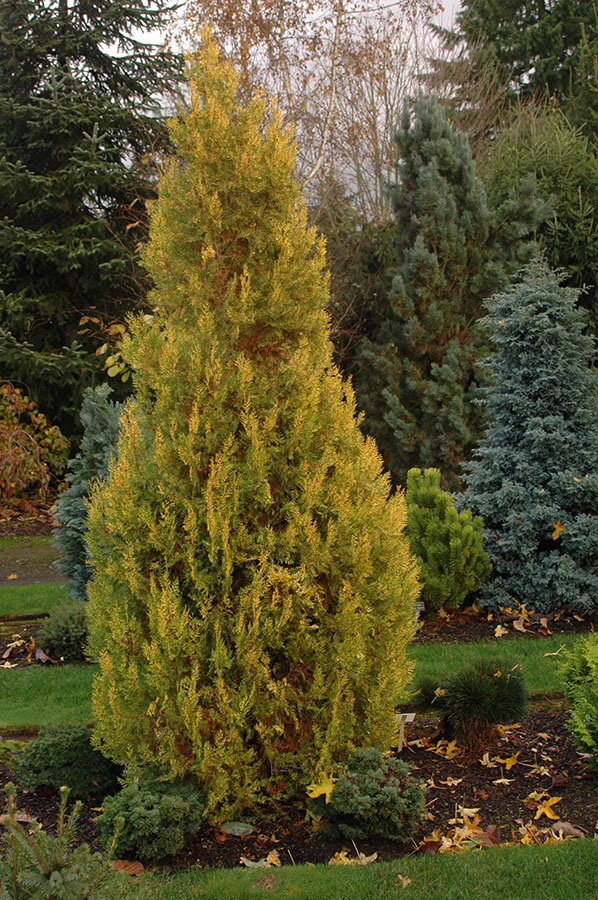
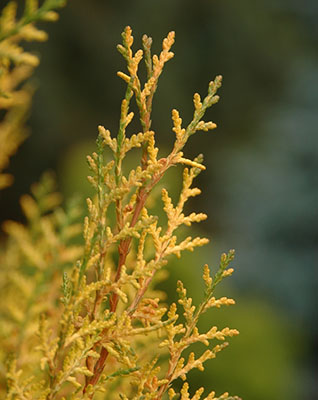
Grows as a dense, conical to columnar tree/shrub. Tends to open up as it ages. Benefitted by good air circulation. Its leaves will emit an odor when bruised. This plant is tolerant of most conditions except for wet, boggy sites.
Insects, Diseases, and Other Plant Problems: Healthy, well-maintained trees have few problems. Scout for bagworms and spider mites. Snow and ice weight can break branches in the winter.
Conifer, evergreen, shrub, upright, somewhat loose, yellow-gold variegation, slow growing, about 6-12 inches (15-30 cm) per year, about 8 × 3 ft (2.4 × 0.9 m) in 10 years. Sun
Hardy to USDA Zone 6
This selection, now marketed as ‘Van Hoey Smith’, was previously known as ‘Aureovariegata’, but this was viewed as an illegitimate name since it is a “latinized” cultivar name applied to a selection after 1959, the year international taxonomic rules (International Code of Botanical Nomenclature) banned the practice of using Latin or latinized cultivar names. The plant was renamed to honor J.R.P. van Hoey Smith formerly director of the Trompenburg Arboretum in Rotterdam and President of the International Dendrology Society and author or co-author (often with D.M. van Gelderen) of many “plant books” including, Conifers: The Illustrated Encyclopedia, Rhododendron Portraits, and Maples of the World.
Taxonomy: At one time this species was in the Thuja genus, as Thuja orientalis. It has been transferred to the genus Platycladus, hence Platycladus orientalis; therefore, Platycladus orientalis ‘Van Hoey Smith’. However, some nurseries and retail outlets continue to use the older designation.
 Dickson Tree Management & Beautification Board