
Quercus palustris
Common Name(s): Pin Oak, Swamp Oak, Swamp Spanish Oak
Previously known as: Quercus rubra var. dissecta, Quercus rubra var. palustris
Phonetic Spelling
KWER-kus pa-LUS-trish
Description
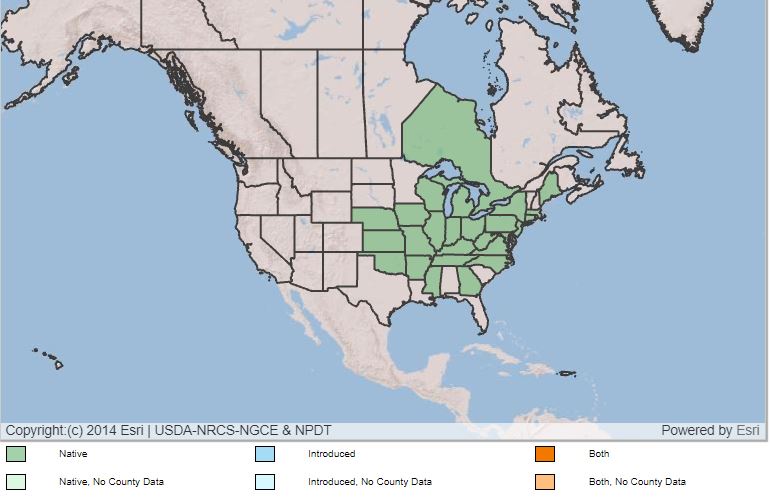
Pin oak is a medium-sized, deciduous tree in the Fagaceae (beech) family. It is one of the faster-growing red oaks, generally reaching a height of 50 to 70 feet with a trunk about 3 feet in diameter. The genus name, Quercus, is the Latin name for oak trees. The epithet, palustris, is from the Latin word palus, which means of marshes or swamps and refers to its native habitat. This tree is native to the northeastern and north-central United States and southeastern Canada.
Pin oak prefers medium to wet, loamy, acidic soils and full sun. It can tolerate poorly drained soils and some flooding, but it is adaptable to drier and urban conditions. It is shallow-rooted and easily transplanted.
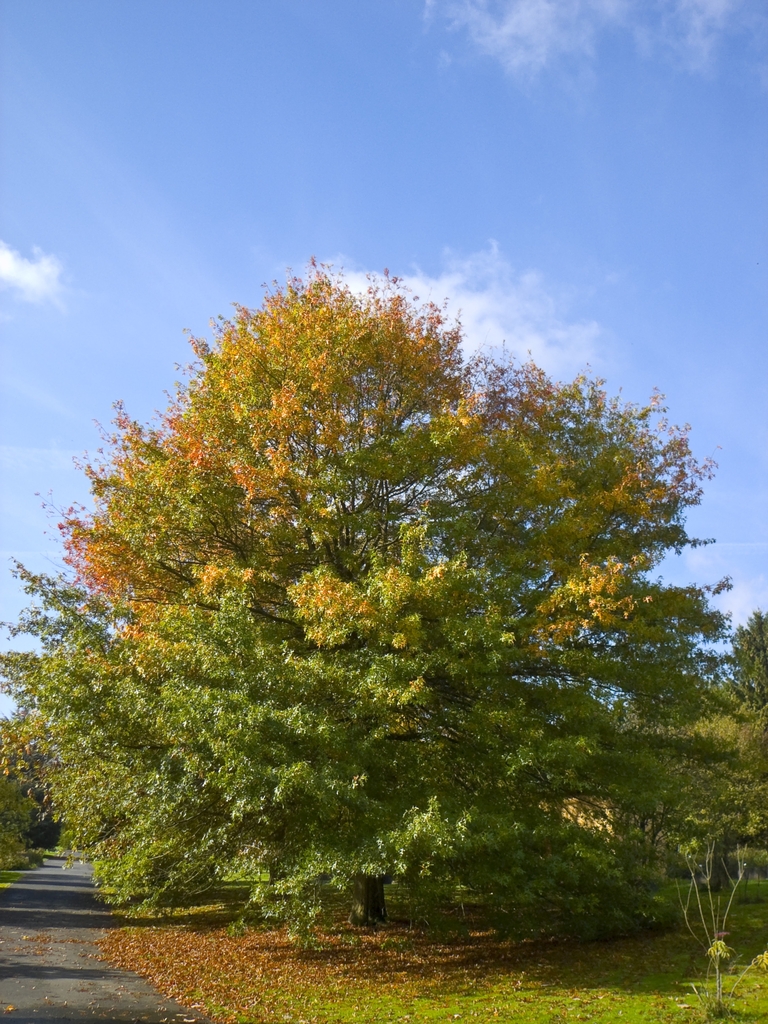
Pin oak has a more slender and graceful appearance than some oaks. The crown is pyramidal when young and becomes more rounded and oval with age. The branching pattern is unique with the lowermost branches being angled sharply downward, the middle branches horizontal, and the upper branches ascending. Young trees and lower branches of older trees hold leaves throughout winter. The fall foliage is orange or bronze to red. This oak won’t produce acorns until around 15 to 20 years old.
Pin oak is very popular and frequently used as a shade tree for home landscapes, urban streets, parks, and woodland gardens. It is tolerant of many soil conditions, heat, and air pollution, but it is toxic to horses.
Quick ID Hints:
Medium-sized deciduous tree with a pyramidal habit when young, rounded, and oval with age.
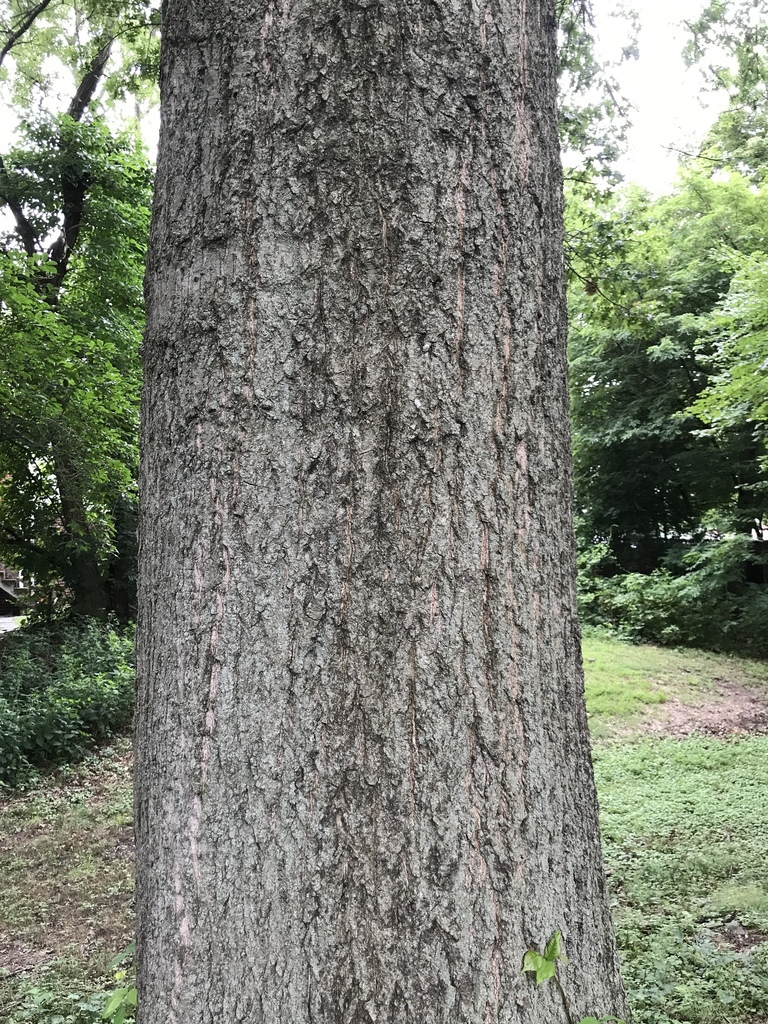
Smooth, gray bark.
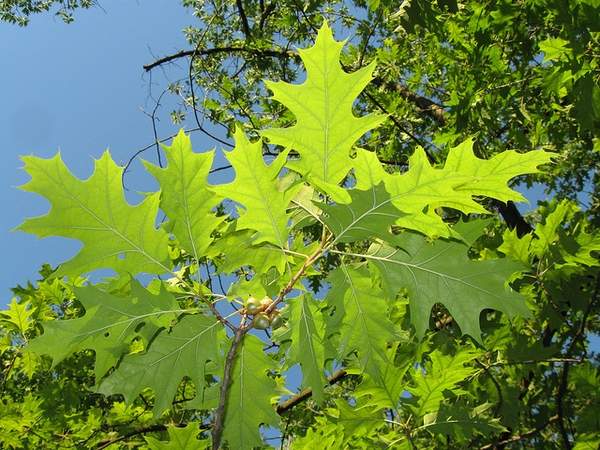
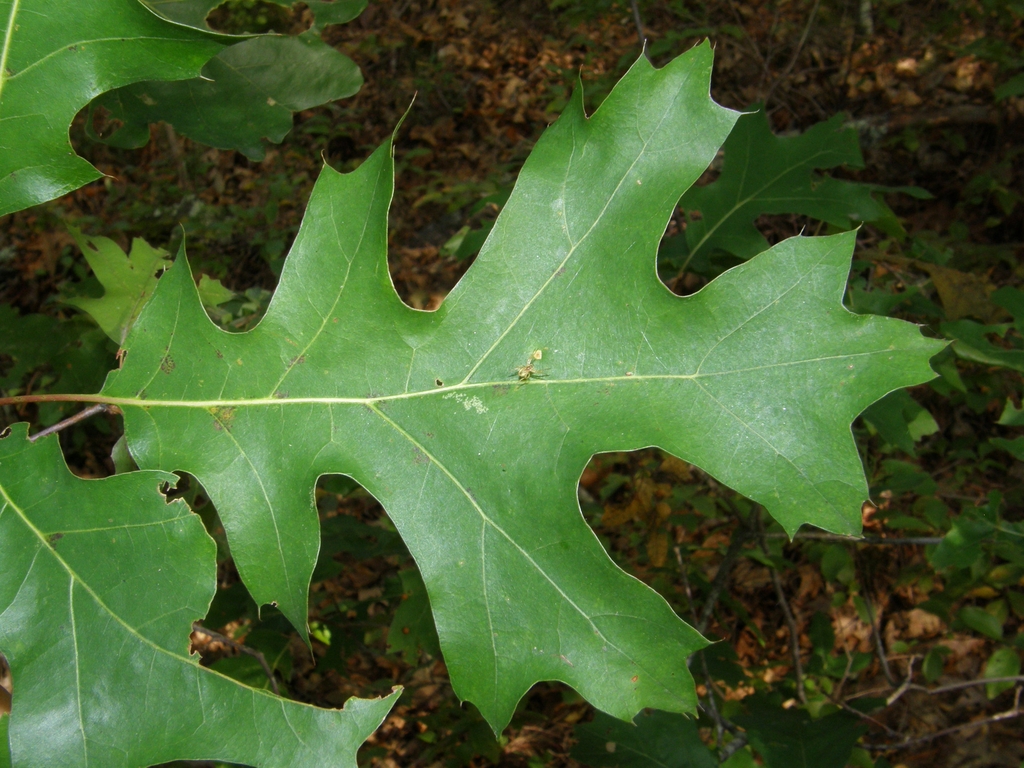
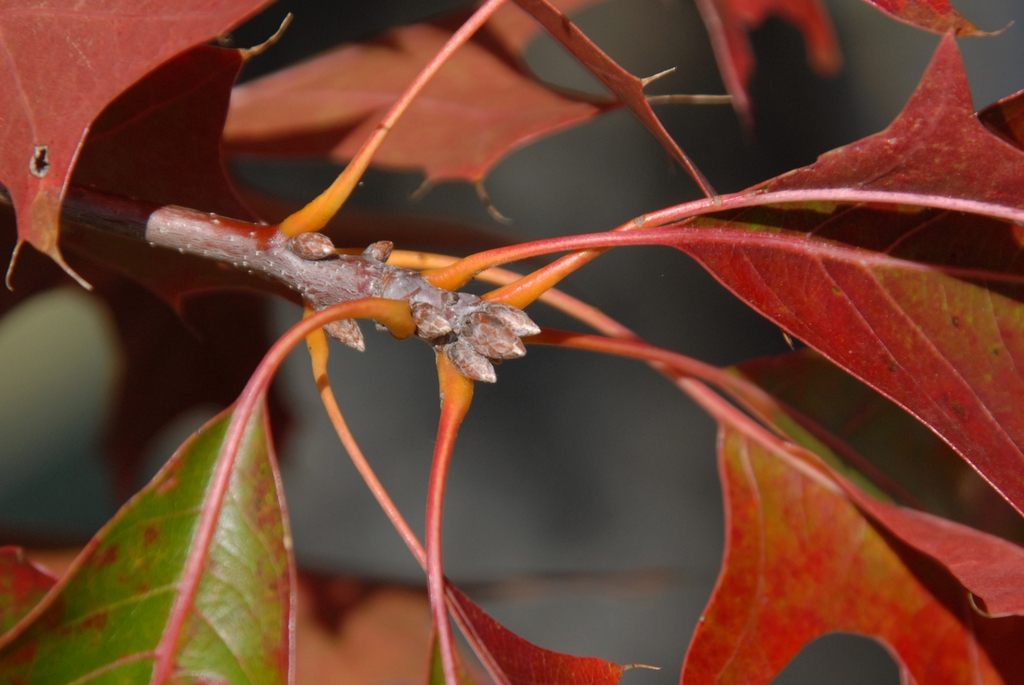
Dark-green leaves on both sides with five to seven sharply pointed lobes and deep U-shaped sinuses, vein piercing through the margin at the tip of the leaf, bristles at the tip, and small tufts of tan-colored hair at the axils of the leaf veins.
Long pendulous chains of yellow to greenish-yellow male flowers in the spring.
Tan, rounded, acorn fruits with a thin smooth cap that covers one-fourth to one-third of the fruit.
Insects, Diseases, and Other Plant Problems: Pin oak is infrequently attacked by the common diseases of oaks. It is susceptible to iron chlorosis due to alkaline soils, which cause yellow coloration in the leaves through the summer months and can eventually kill the tree. Insect pests include gypsy moth, obscure scale, oak leaftier, pin oak sawfly, scarlet oak sawfly, forest tent caterpillar, leaf roller, horned oak gall wasp, and gouty oak gall wasp. Disease problems include oak wilt, oak leaf blister, pin oak blight, and Dothiorella canker.
Willow
Karl-Ludwig Poggemann
Rafael Medina
Sandy Wolkenberg
Jim Robbins
 Dickson Tree Management & Beautification Board