

Betula nigra
Common Name(s): Black Birch, Red Birch, River Birch, Water Birch
Phonetic Spelling
BET-yoo-luh NY-gruh
Description
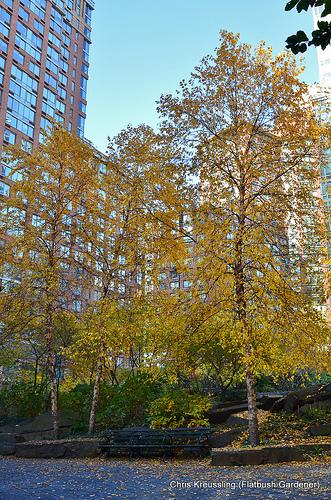
River birch is a native deciduous, upright, flowering tree with cinnamon-brown, exfoliating bark and yellow fall foliage that tends to drop off the tree early and quickly. A member of the Betulaceae (birch) family, it is the only native birch that does well in low elevations of the south. Betula is Latin for birch and describes a genus of about 60 species of deciduous trees and shrubs found in many gardens and landscapes throughout the northern hemisphere.
River birch prefers wet sites and does best in moist, acidic, sandy, or rocky, well-drained loam in full sun to part shade. The best foliage color occurs in full sun. River birch is perhaps the most culturally adaptable and heat tolerant of the birches. This species has been known to tolerate flooded conditions for extended periods of time. For this reason, it is naturally found in riverbanks, streambanks, and floodplains. It is also quite wind resistant. In the landscape, keep the soil consistently moist and consider using soaker hoses and bark mulches to keep the root zones cool and moist. It needs little pruning, but if necessary, you can prune during the dormant season. Do not prune in winter or spring when the sap is running because it will bleed.
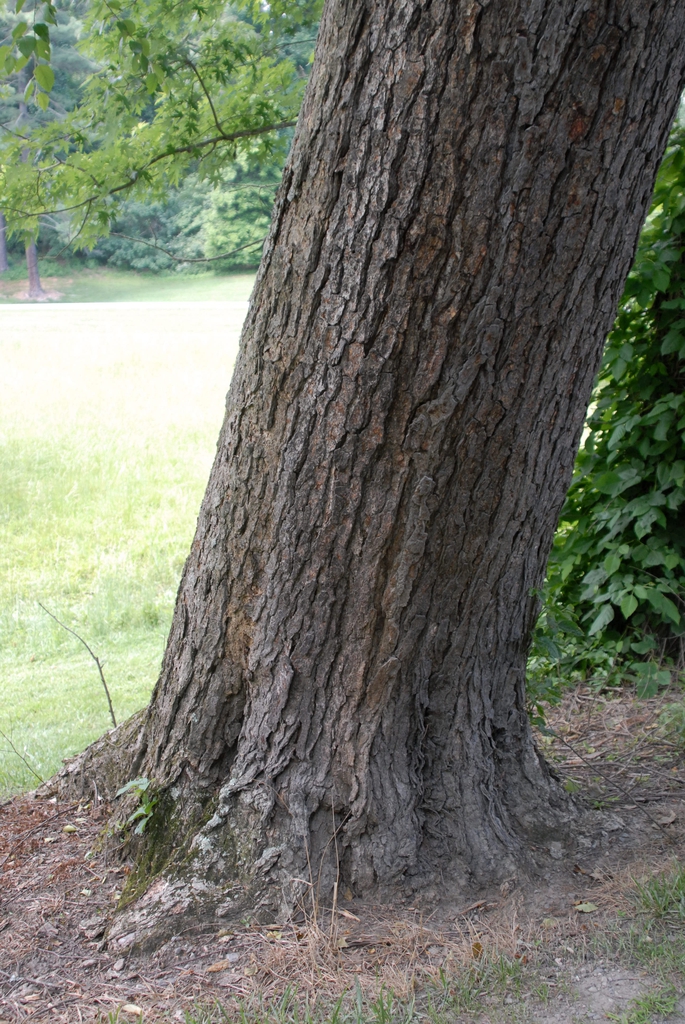
The bark of young river birch trees is reddish-brown with a papery appearance. The bark peels away year-round, and the inner bark varies in hue from light to dark. The papery bark layers remain attached, giving it an attractive ragged appearance.
Consider planting the Heritage cultivar, which has superior ornamental characteristics.
Site the tree as a specimen or small grouping for shade or screening in the lawn, a rain garden, or naturalized, woodland, or riparian areas. Do not plant it next to the house, because falling branchlets will clog gutters.
Insects, Diseases, or Other Plant Problems: Although river birch is resistant to the bronze birch borer, which infects and kills trees, aphids, leaf miner, and birch skeletonizer may occur. Watch for leaf spot problems. River birch tends to shed interior leaves during summer droughts and dry periods and can become stressed by summer heat and humidity. It also tends to drop a lot of twigs, making it better suited for less manicured areas of the landscape.
Chris Kreussling

Kathleen Moore

Kathleen Moore
Jim Robbins

 Dickson Tree Management & Beautification Board