
Pinus echinata
Common Name(s): Old-Field Pine, Rosemary Pine, Short-Leaf Pine, Shortleaf Pine, Yellow Pine
Phonetic Spelling
PY-nus ek-in-AY-tuh
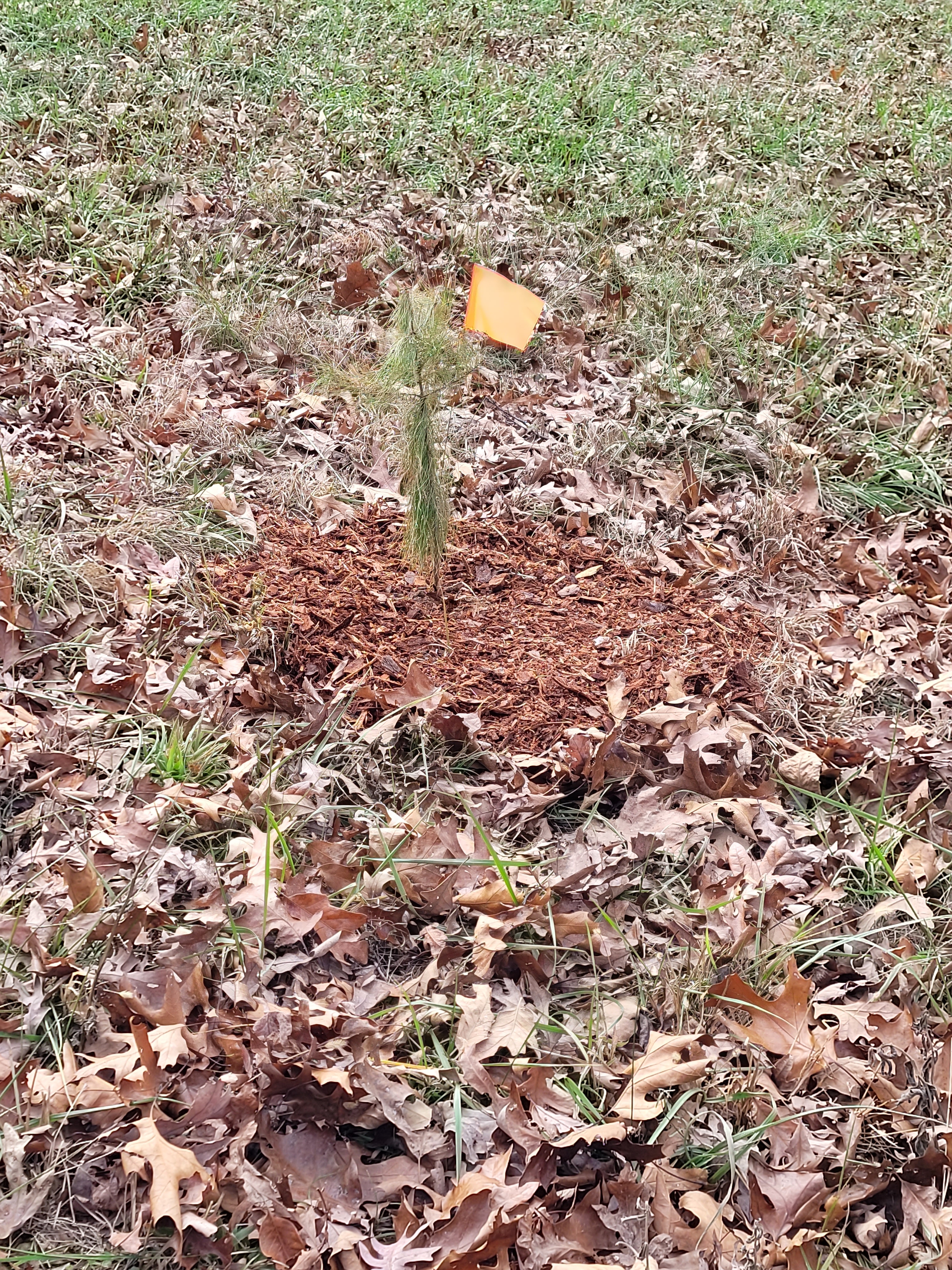
planted Nov 2024 by Mike Tummins
Description
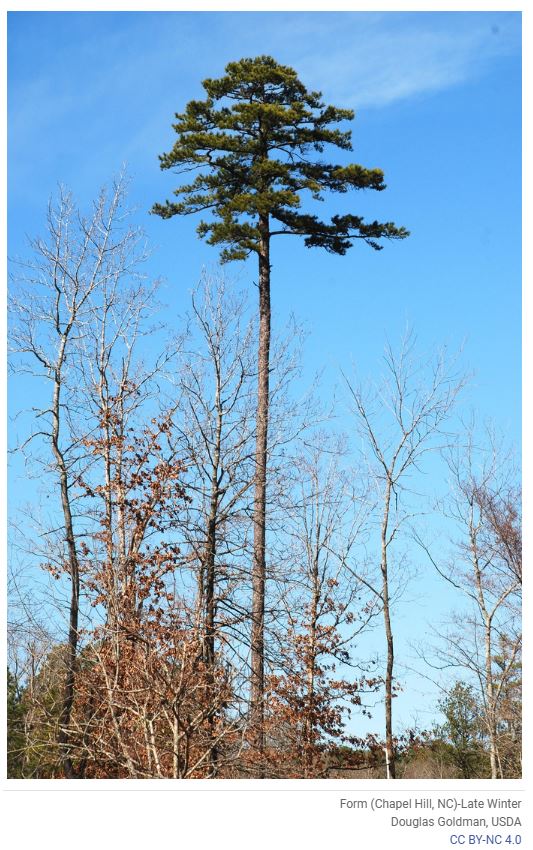
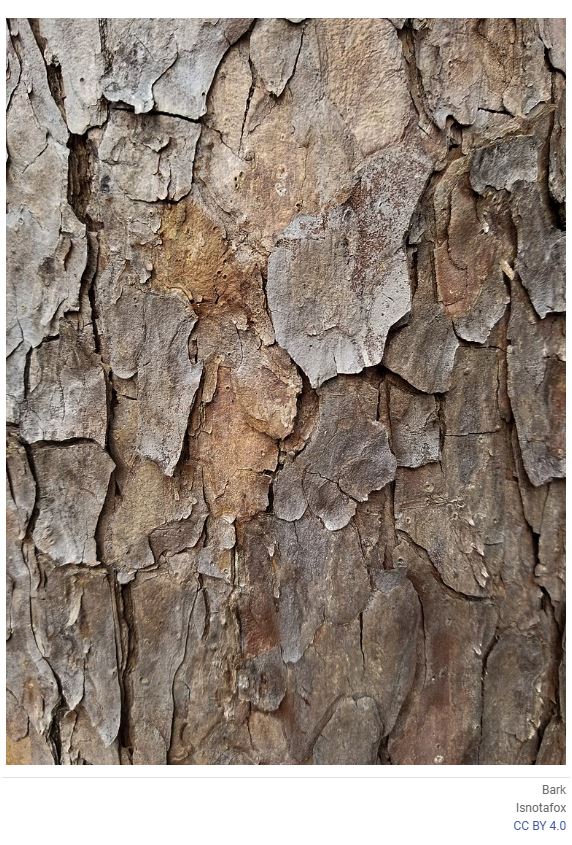
Shortleaf Pine is an evergreen tree that may grow 80 to 100 feet tall. The tree has 3- to 5-inch slender and flexible needles in clusters of 2 or 3. The fascicle sheath is persistent. The bark is scaly and dark on young trees. As the tree ages, flat scales which reveal a yellowish color when removed develop. The tree produces both a pale purple male cone and a pale pink female cone.
The Shortleaf Pine grows best in average, dry to medium, well-drained soils in full sun. It will tolerate some light shade. It will also tolerate a wide range of soils but prefers sandy loams.
It is an important timber tree in the deep South where it is harvested for a variety of purposes, including lumber, plywood and wood pulp (for paper). The wood is heavy and hard, fine-grained with a yellow-brown or orange color, containing less resin than other pines economically important to the South. Oleoresins are extracted to make turpentine.
Buds: 6 mm (0.2 in.) long oblong to ovate, reddish-brown to greyish-brown scales and resinous.
The formation of a deep taproot complicates transplanting from the wild.
Fire Risk: This plant has a high flammability rating and should not be planted within the defensible space of your home. Select plants with a low flammability rating for the sites nearest your home.
Insects, Diseases, or Other Plant Problems: Healthy, well-maintained Shortleaf pine trees usually have few problems. Pine beetles and weevils are potential insect pests. This tree is susceptible to wind damage.
City of Dickson Arboretum



 Dickson Tree Management & Beautification Board