Celtis laevigata
Common Name(s): Hackberry, Southern Hackberry, Sugarberry, Sugar Hackberry
Phonetic Spelling
SEL-tis lee-vih-GAY-tuh
Description
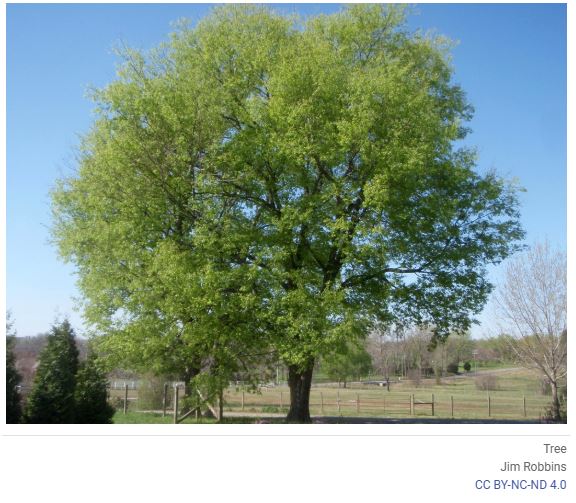
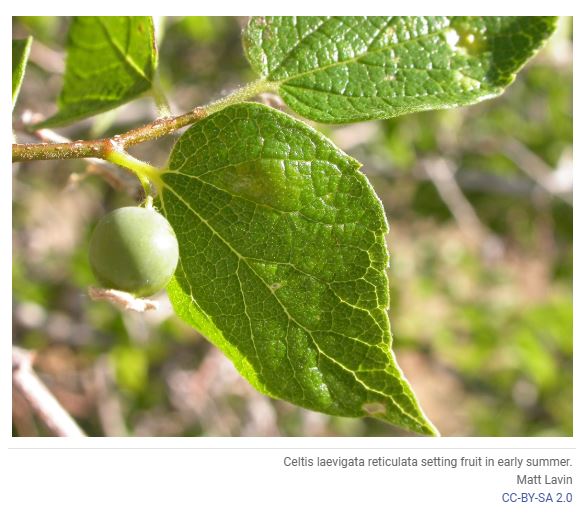
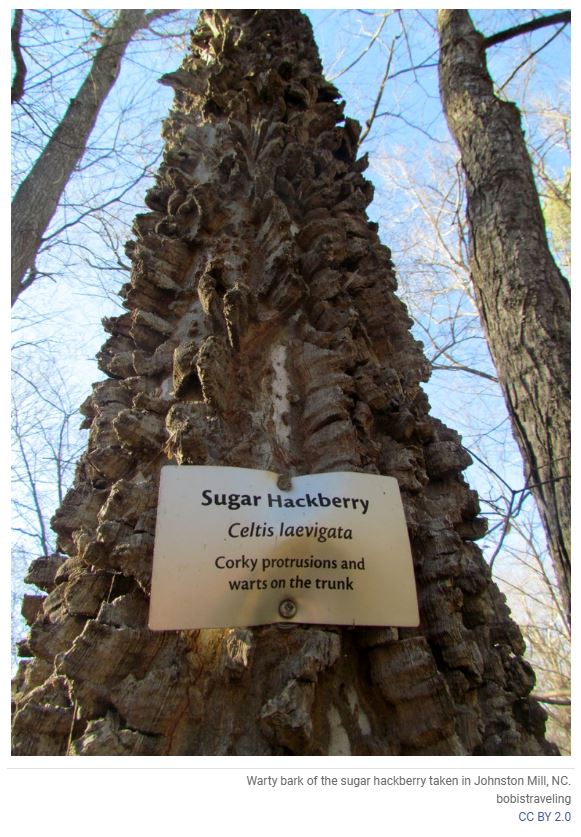
Sugarberry is a deciduous tree native to North America and is often found along stream banks. It can grow 50-70 feet tall with a somewhat narrower spread. It is fast growing with a rounded vase crown and makes a good shade tree as it is resistant to urban pollution. The fruits mature to red or purple and are eaten by many birds and mammals. In zones 8 and under, it can have attractive yellow fall color. The unusual warty bark and fruits provide some winter interest.
The tree prefers a sandy to clay loam that is moist and well-drained in full sun to partial shade. It will tolerate salt, acid to mildly alkaline pHs, periodic flooding and drought once established. It is tolerant of soil compaction making it useful in parking lot islands and medians in addition to using as a shade tree for your home or naturalized area.
Celtis laevigata can be pruned and kept at shrub size by cutting them to the ground every 2-3 years. It is fairly resistant to witches’ broom.
In the butterfly garden, it is a food source for a variety of butterfly larvae including American snout (Libytheana carinenta), Mourning cloak (Nymphalis antiopa), Hackberry emperor (Asterocampa celtis), Tawny emperor (Asterocampa clyton) and Question mark (Polygonia interrogationis). It also is a host plant for moth larvae such as Ruddy dagger (Acronicta rubricoma), Thin-lined owlet (Isogona tenuis), and Small heterocampa (Rifargia subrotata).
Insects, Diseases, or Other Plant Problems: Watch for Asian wooly hackberry aphid and scale. hackberry nipple gall is common and while it disfigures the leaves it does not hurt these trees. Powdery mildew and leaf spot may occur. Scales of various types may be found on Hackberry. These may be managed with horticultural oil sprays.




 Dickson Tree Management & Beautification Board