Liquidambar styraciflua
Common Name(s): American Sweet Gum, Redgum, Red Sweet Gum, Sweetgum, Sweet Gum, Sweetgum Tree
Phonetic Spelling
lih-kwid-AM-bar sty-rak-ee-FLOO-uh
Description
American sweetgum is a woody, deciduous tree frequently found in wet river bottoms, in swamps that frequently flood, and on drier uplands (except the high mountains). It is native to the eastern United States and Mexico and is a member of the sweetgum family (Altingiaceae). Its common name refers to the aromatic gum that oozes from wounds to the tree. An alternate name, redgum, may come from the reddish-brown heartwood found in logs greater than 16 inches in diameter.
American sweetgum grows in full sun to partial shade in neutral to acidic soil that is moist yet well-drained. It is resistant to fire, heat, drought, soil compaction, deer, and rabbits. It may grow 60 to 100 feet tall with a trunk diameter of 4 feet or more. The tree has a shallow root system and should be planted in spring because roots take three to four months to recover from the shock of transplanting. Propagate sweetgum by seed.
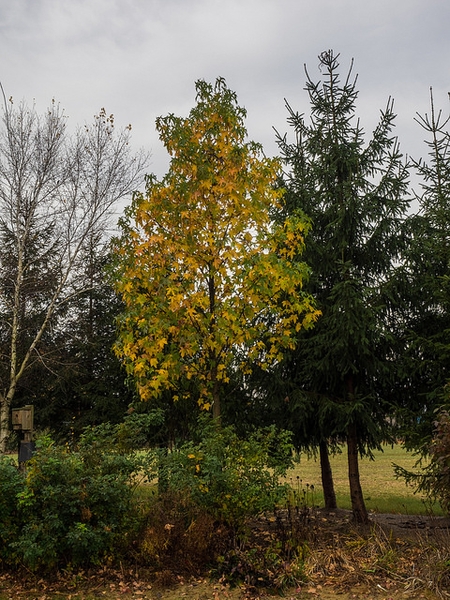
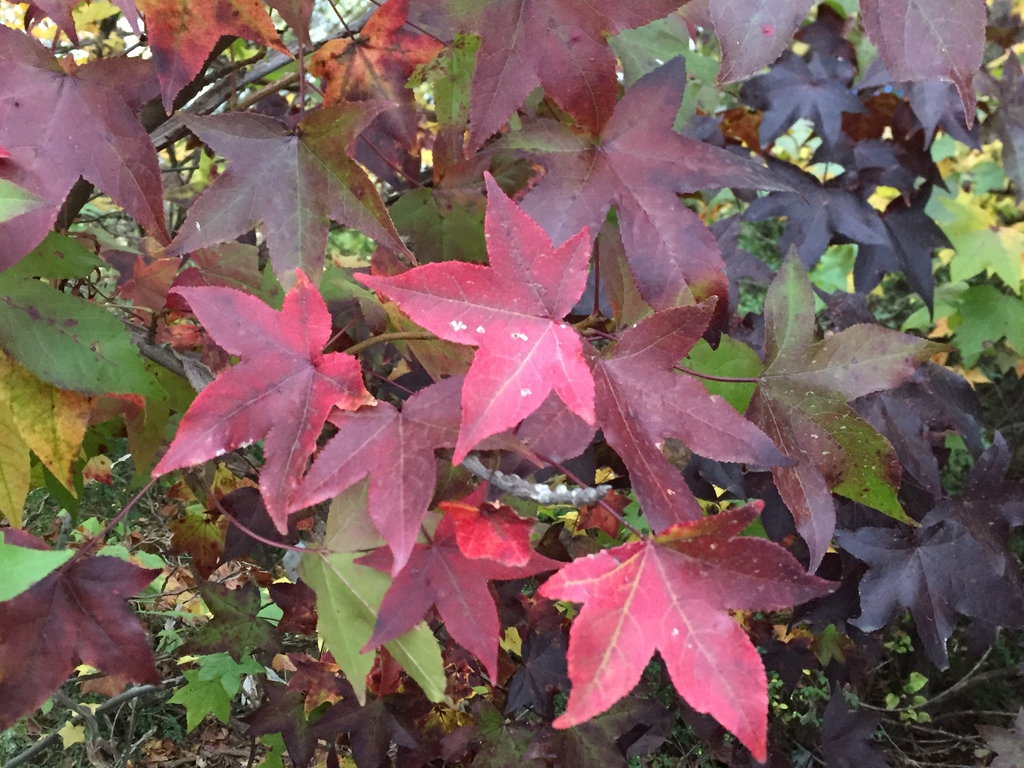
It is often the bane of some homeowners’ existence because of its messy, troublesome fruit. Small, bright yellow-green (tinged with red) flowers mature on stalks in spring. The female flowers give way to spherical, spiny fruiting heads, known as gumballs, which are composed of numerous tiny capsules, each bearing one or two-winged seeds. The fruit litters the ground between December and April. On the bright side, the glossy, star-shaped leaves turn bright red, purple, yellow or orange in the fall and remain on the tree for a long time. On some trees, particularly in the northern part of its range, branches are covered with laminar corky projections.
Given its height and a width spanning 40 to 50 feet, American sweetgum makes an excellent shade tree. It is also a good addition to a woodland or recreational play area and children’s, edible, native, nighttime or pollinator gardens. The tree attracts songbirds, small mammals, moths and pollinators.
Insects, Diseases, or Other Plant Problems: Webworms, caterpillars, borers, and scale may cause problems in some areas. Leaf spots, wood rot, and bleeding necrosis may occur. Iron chlorosis may occur in alkaline soils. The fruit is a litter problem in lawn and patio areas.
F. D. Richards
Jim Robbins
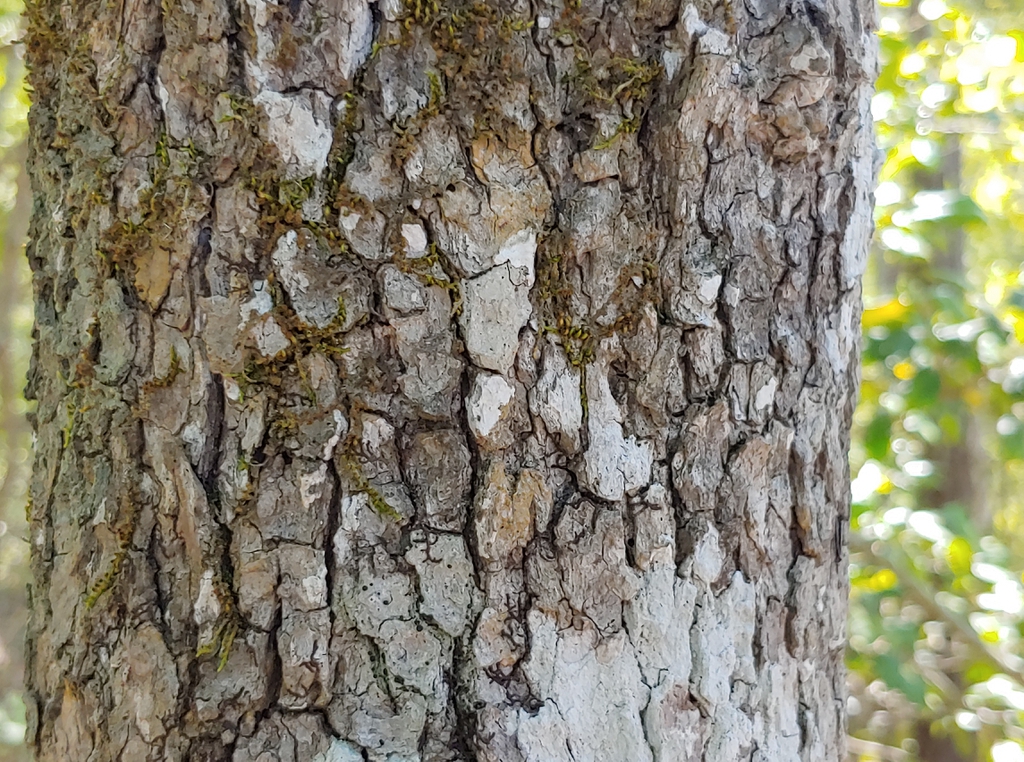
skdavidson
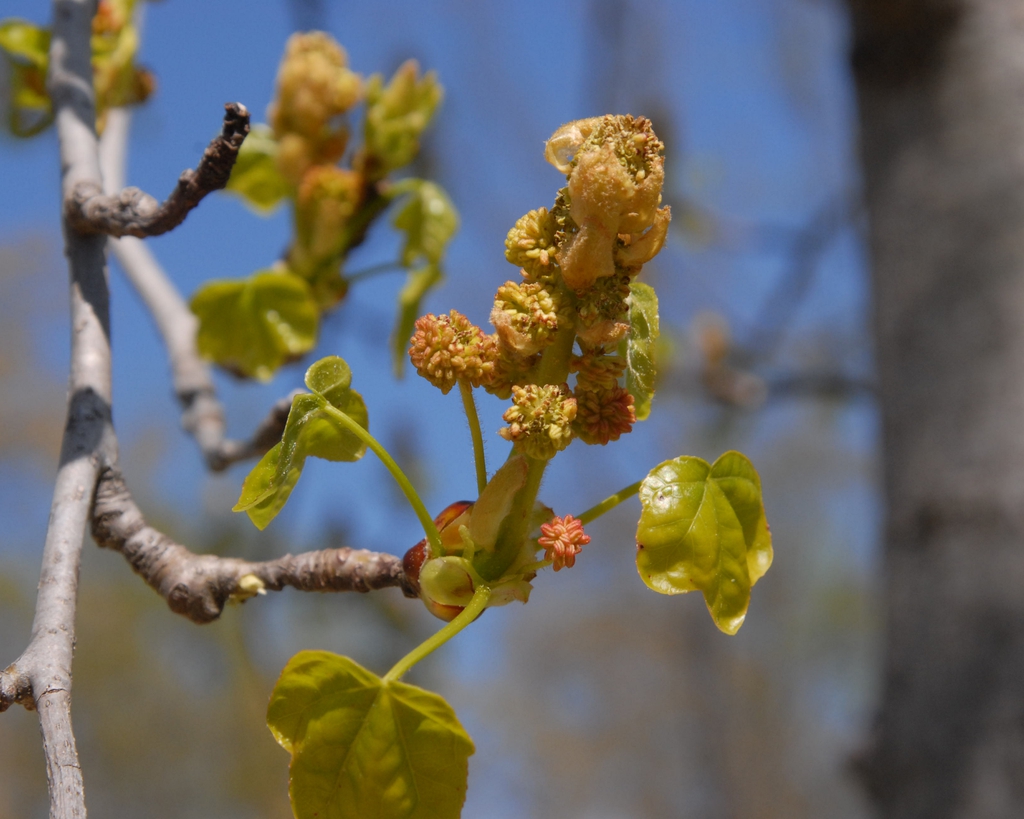
Jim Robbins
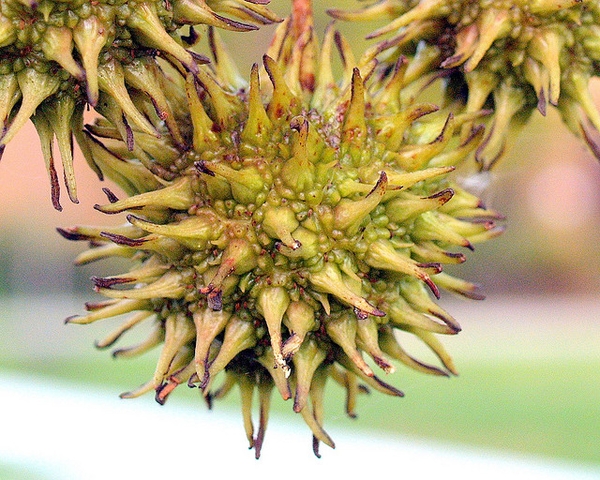
Maggie
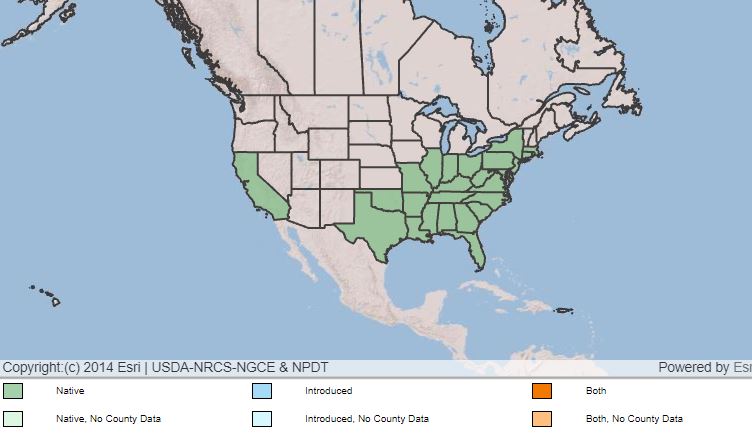
 Dickson Tree Management & Beautification Board