-
Exciting New Addition to the Arboretum!
The City of Dickson Arboretum has a new addition ~ a Bigtooth Aspen, generously donated by area resident Sheryl Eades. Read all about this species here: https://dicksontreeboard.org/bigtooth-aspen/
-
Dickson Tree Board Members Working Hard
Members of the Dickson Tree Board have been working hard putting in a small entrance garden at the Arboretum. The soil was hard and compacted, but Warner Taylor powered through it with the help of a tiller. The existing soil was amended before installing a good variety of plants. It’s still a work in progress and the recent rain has helped tremendously. We’ll be in the arboretum every day, watering and maintaining the bed. It’s hard work, but the rewards are great. We hope you enjoy it.
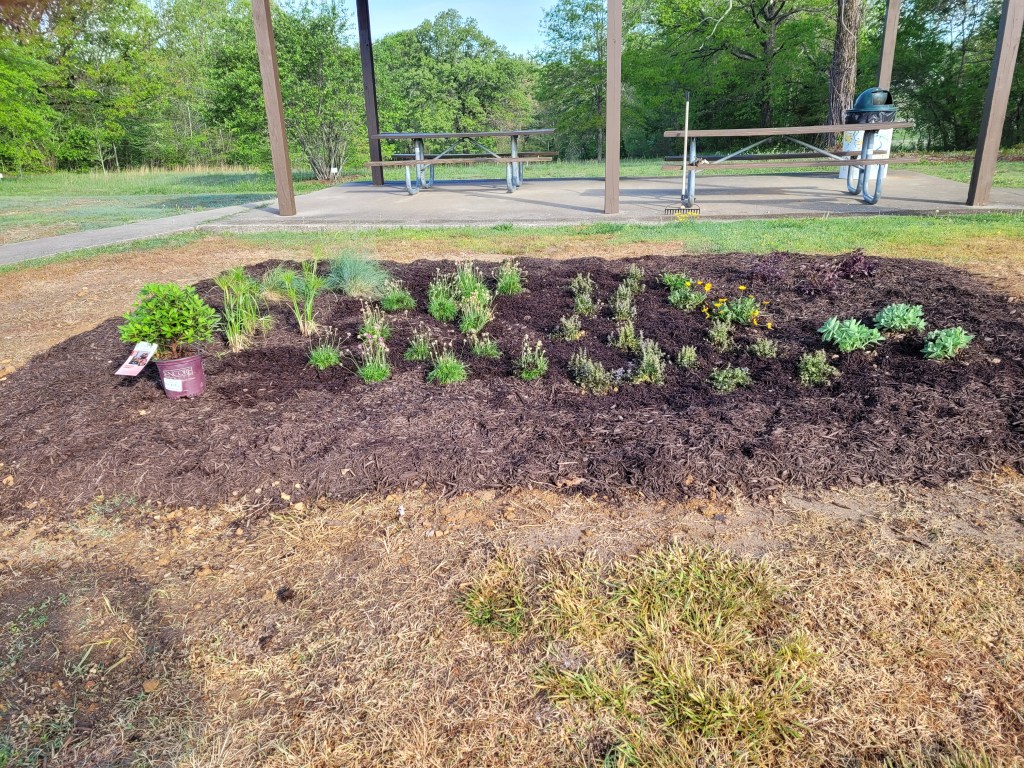
View from the front – we’re anxiously waiting for them to grow into their space! 
The last plant ready to go in! 
Pretty good soil once we got through the top layer. 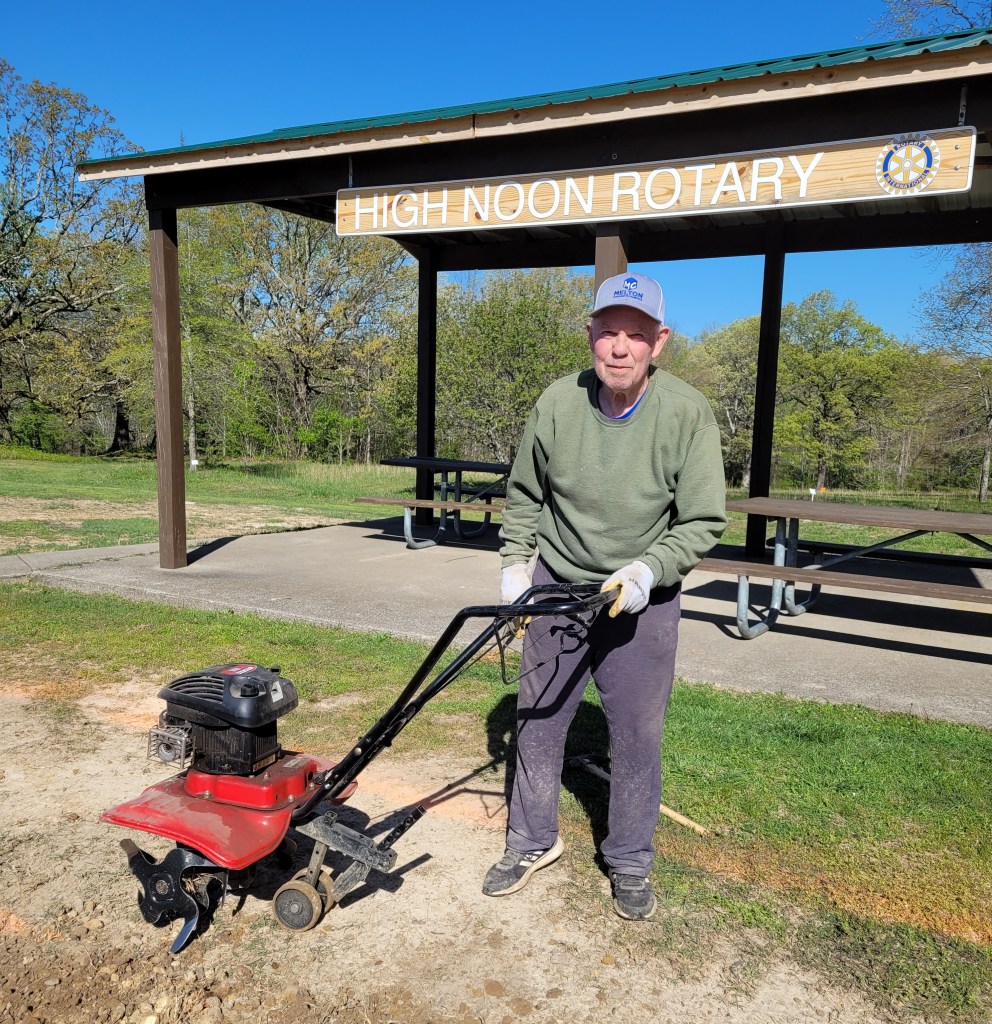
Warner Taylor determined to till up rock-hard soil! 
Preparing for planting 
Amendments! -
What’s Blooming?
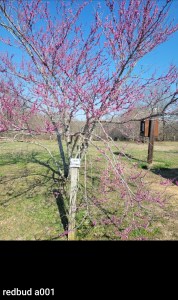
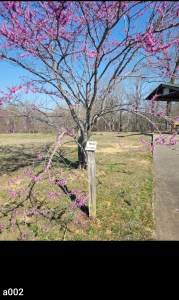
Look what’s blooming right now!
Downy Serviceberry and Redbuds near the entrance to the arboretum. Crews have been working diligently to weed and mulch. It’s a work in progress, but the weather is perfect to walk around and see what’s happening in the City of Dickson Arboretum.

-
National Invasive Species Awareness Week
This week is National Invasive Species Awareness Week. Find out more about invasive species, the threat they pose & what can be done to prevent their spread.
To find a forest health worker in your state, visit the Southern Regional Extension Forestry website at http://southernforesthealth.net/directory.

-
“Tree Appreciation”
Enjoy this short video of Tom Lee Park with Wes Hopper in Memphis, TN
-
A Surprising Plant Group – Enjoy this article from Tennessee Smart Yards
-
Arboretum Certification
Dickson Tree Management & Beautification Board is currently striving to update the City of Dickson Arboretum and attain certification via Tennessee Urban Forestry Council. We hope to complete the process for Level 1 Certification in 2024 to provide a welcoming and educational setting for visitors to learn about trees in a relaxed and tranquil setting.
Tennessee Arboretum Certification Requirements & Levels
General Requirements
- Accurately identify at least 30 distinct tree species.
- Meet criteria for Level 1.
- Location must be open to the public. Special consideration for private sites is available.
- Trees are and will be maintained in good health.
- Protect trees from string trimmer and mower damage (through communication with maintenance, markings, mulch, or protection device).
- Mulch, if used, must not touch the tree’s trunk.
- Newly planted trees must be watered on a regular schedule.
- All trees are to be labeled with both their scientific/botanical and common names.
The scientific/botanical name must be underscored or in italics. The current edition (6) of Dirr’s Manual of Woody Landscape Plants is the Style Manual for names and labeling format. Other descriptive information is not required.
- Tree labels must be easy to read and located near tree.
Place tree labels on or directly adjacent to each tree. Staked tree labels are preferred; however, tags can also be hung from limbs or embedded in trunks using aluminum nails or screws at a readable height. Steel screws or nails are not recommended. Spacing-springs are optional, but need to be placed in front of the sign
- Trees located within or overhanging high-use areas must be in safe condition and inspected regularly for potential hazards.
- If a tree poses a safety risk, then corrective actions must be taken.
- The TUFC Certified Arboretum sign must be posted and maintained.
- Re-certification is required every 3 years.
-
New Plantings for 2024
In the coming new year, The Dickson Tree Management & Beautification Board will work toward adding new tree species and replacing some that were lost. Additions to the arboretum will be carefully chosen to grow our collection. We are happy to hear recommendations for future selections from local citizens.
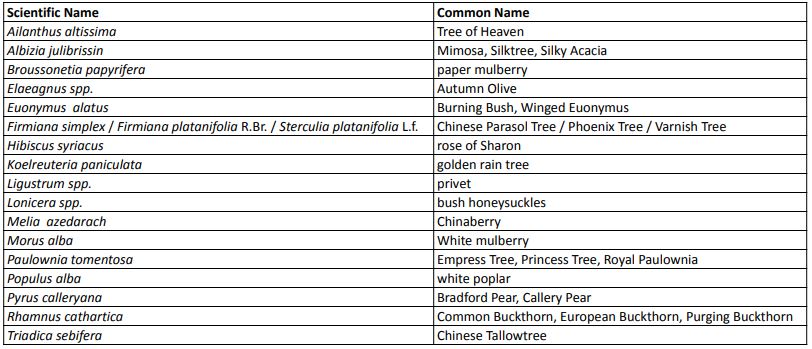
The following table from TUFC lists trees that cannot be planted in the arboretum due to their invasive status.
-
Developing a Flair for Root Flares
Finding the root flare is generally easy, just look for where the trunk becomes roots. Why is it important to identify this region before planting? Improper planting depth is a major cause of tree, shrub, and woody perennial failure. The root flare should always be at grade. The roots should be underground while the trunk or stem remains above ground.
While it’s easy to find the proper planting depth for bare-root stock, it’s much more difficult with container or B&B plants. Don’t be shy about removing the burlap or the top layer of container media. If you are making a purchase, it’s probably a good idea to ask first.
Some species such as wetland-adapted plants won’t mind if they are planted a little too deep, but many others won’t tolerate it. If the roots cannot get enough oxygen to survive, they will try to create a new system of adventitious roots. These types of roots cannot supply enough water to the plant, putting it in a state of chronic drought.
Excess moisture and lack of oxygen from being planted too deep sets the plant up for attacks by pests and diseases.
The best response is to dig the plant up and re-plant at the right depth.
The best preventative is to develop your flair for finding the root flare before planting.
-
City of Dickson Arboretum
A “Tree Garden” at Buckner Park
An Arboretum is sometimes referred to as a “tree garden”, but it is much more than that. To be certified as a Level I Arboretum in the State of Tennessee, an Arboretum must contain a minimum of 30 trees; must be open to the public; and must have a path laid out that is easy to follow and safe to hike. Signs can be attached to the trees using screws that will only touch the outermost bark of the tree, hung from their branches, or placed in the ground.
Each Arboretum is unique. Some emphasize the trail and some the trees. Some are sponsored by universities or are part of a Nature Center, while others are small community-based projects. They all share one thing in common though, they are there to be enjoyed and to be utilized.
Feel free to wander along the paths at your own pace. Take the time to enjoy the wildflowers or vistas that are there. Watch for the deer or other wildlife that populate the trail area. Bring your camera and take pictures. There is something to see every season.
Wildflowers and butterflies are everywhere in the months from May to Oct. Birds greet visitors with songs as they flit between the trees. Summer brings new life and an abundance of plant life; wildflowers and trees awaken from winter’s slumber. Autumn carries its golden promise from tree to tree. Who can resist a walk among fallen leaves? Winter stillness blankets the trail making the walk a pleasant respite from life’s daily stresses.In the coming months, the Dickson Beautification & Tree Management Board will be making improvements to the city arboretum at Buckner Park; replacing some trees, adding new ones, and installing new signs to identify our trees. Make some time to visit. Stroll around the paths (careful – they are a bit rough in spots) and get to know our trees. Our goals for 2024 include making the arboretum a nice place to spend some time and recertifying the Arboretum.
-
Girl Scouts plant tree at Luther Lake
from the Dickson Post Apr 23, 2022
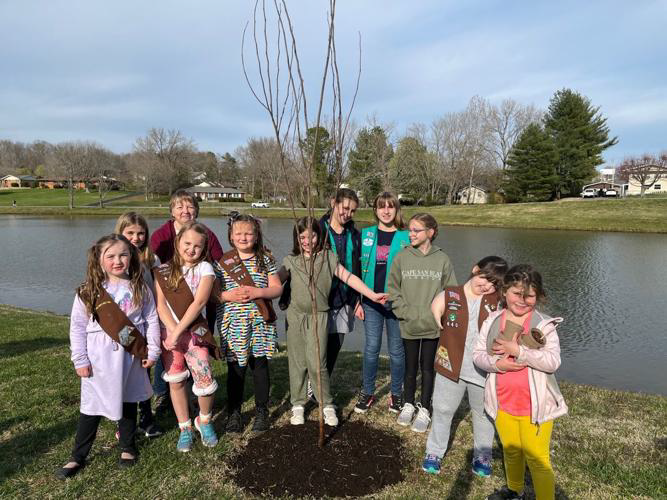
The Daisy, Brownie, and Junior Scouts from Girl Scout Troop 640 recently planted an Eastern Redbud tree at Luther Lake. Junior Scouts Clara Levine, Natalie Wright, and Jacklyn Orgain researched and selected the tree themselves as part of their Girl Scout Bronze Award project. The Bronze Award is the highest honor a Girl Scout Junior can receive. The troop planted the tree with guidance from the Dickson Parks Department and the Dickson Tree and Beautification Board.
 Dickson Tree Management & Beautification Board